She Quit Teaching on a Tuesday. By Friday, She Was Changing How America Eats.
Burnout doesn't announce itself cleanly. It doesn't knock on the door and hand you a notice. It accumulates — in the stack of ungraded papers, in the fluorescent hum of an underfunded classroom, in the slow erosion of the thing that made you want to teach in the first place. And then one day, you're done. Not dramatically. Just done.
For her, that day came on a Tuesday in the mid-twentieth century, in a mid-sized American city, in a school that had asked too much of her for too many years. She handed in her resignation, walked out into a gray afternoon, and had absolutely no idea what came next.
What came next changed the way America feeds itself.
The Kitchen as Last Resort
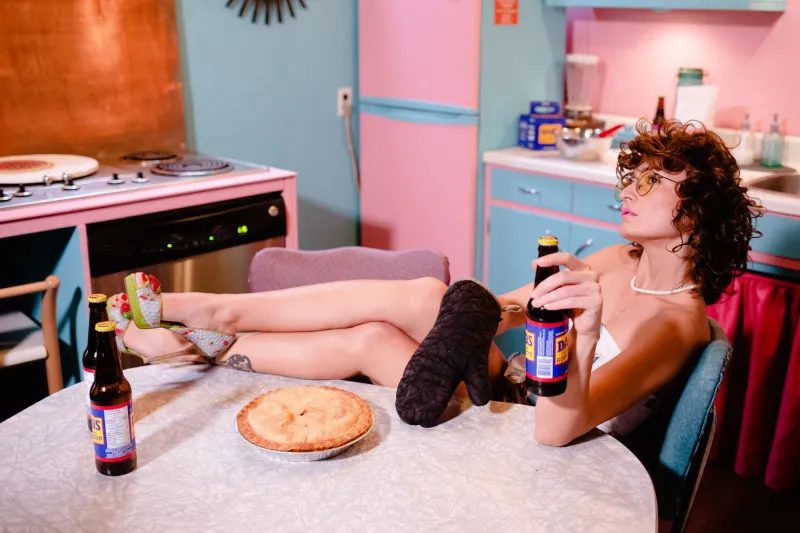
She didn't retreat to her kitchen because she loved to cook. That's the romantic version of the story, and it isn't quite right. She went to the kitchen because it was there. Because she was home, with no job and no plan, and the kitchen was a place where her hands could do something while her mind tried to figure out what had just happened to her life.
She started small — preserving vegetables from a neighbor's garden, experimenting with portioning out meals in ways that would keep longer and reheat cleanly. It was practical work, the kind that asks nothing of you emotionally. Chop, measure, seal, label. Repeat. There is a particular comfort in that kind of repetition when everything else feels uncertain.
But she was also, without realizing it, a problem-solver. And the kitchen, it turned out, was full of problems nobody had solved very well.
The Problem Nobody Was Solving
In the postwar decades, American institutions — schools, hospitals, military bases — were struggling with a version of the same logistical headache: how do you feed large numbers of people quickly, cheaply, and with some minimal nutritional consistency, when your kitchen staff is undertrained, your equipment is unreliable, and your budget has been cut twice already?
The existing answers were, to put it gently, bad. Cafeteria food had become a national joke for a reason. Military rations were calorically adequate and texturally miserable. Nobody had cracked the code on how to preserve food at scale in a way that didn't sacrifice everything that made it worth eating.
She didn't know any of this when she started tinkering. She was just a tired woman in a home kitchen, trying to figure out how to make a pot of something last a week without turning into a science experiment.
The Accidental Method
What she stumbled onto — and it was genuinely stumbled, through months of trial and a great deal of error — was a system. A method for pre-portioning, flash-cooling, and reheating food that preserved texture and nutritional value in ways the standard approaches of the era didn't. She developed it intuitively, through repetition and adjustment, the way cooks have always developed technique: by paying attention to what worked.
She started writing it down, not because she thought it was significant, but because she had a teacher's instinct for documentation. Old habits. She made charts. She annotated her failures with the same careful hand she'd once used to mark up student papers.
A neighbor who worked in school administration saw what she was doing and asked her to come explain it to the district's food service coordinator. She did, mostly as a favor. The coordinator had questions. More people were called in. Within a few months, her method was being piloted in a handful of school cafeterias — quietly, with no fanfare, under the radar of anyone who might have given her credit for it.
How Quiet Revolutions Work
This is the part of the story that deserves to sit with you for a moment.
She never became a famous name. The method she developed moved through institutional channels the way most practical innovations do: adopted, adapted, credited vaguely to "new approaches in food service," and eventually absorbed so completely into standard practice that no one thought to ask where it came from. Her system influenced the development of school lunch programs that fed millions of American children. Versions of her portioning logic turned up in military ration development during the 1950s and 60s. And the frozen food industry — then in its explosive early growth phase — borrowed from principles she'd worked out in a home kitchen while trying to figure out what to do with herself after a breakdown.
She didn't fight for the credit. There's no record of her trying. She had moved on — back into education, eventually, in a different capacity, with a different relationship to the work. The kitchen chapter had been a detour. Except it wasn't.
What Desperation Builds
There is something worth naming in the specific circumstances that produced her discovery. She wasn't working in a laboratory with a research budget. She wasn't commissioned to solve a problem. She was exhausted and unemployed and standing in her kitchen because she didn't know where else to stand.
Desperation and curiosity, when they arrive together, make for a strange and powerful combination. Desperation strips away the self-consciousness that stops most people from experimenting. Curiosity makes you pay attention to the results. Put them together in someone with a methodical mind and nothing left to lose, and occasionally — not always, but occasionally — something remarkable comes out the other side.
She never set out to change how America eats lunch. She set out to get through the week. And in doing so, she handed an entire generation of American kids something better than they would have gotten otherwise — even if they ate it without ever knowing her name.