The Inventor They Couldn't Put on Paper: How Beulah Henry Beat a System Built Against Her
The Inventor They Couldn't Put on Paper: How Beulah Henry Beat a System Built Against Her
Somewhere in the US Patent Office archives, there are dozens of records bearing names that are not Beulah Henry's. Male names. Proxy names. Names attached to inventions that came entirely from a woman who understood, with clear-eyed precision, that the system she was working within had been built to exclude her — and who decided that was the system's problem to deal with, not hers.
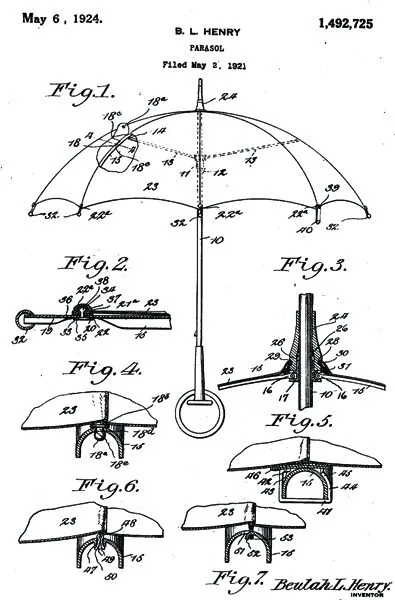 Photo: Beulah Henry, via blogger.googleusercontent.com
Beulah Henry was one of the most prolific inventors of the early twentieth century. She held at least forty-nine patents, possibly more. She invented things that are genuinely useful — a vacuum ice cream freezer, a doll with eyes that could open and close, an umbrella with a snap-on interchangeable cover, a typewriter attachment that could produce four carbon copies simultaneously without carbon paper. She was called, by those who knew her work, "Lady Edison." She deserved the comparison.
She also spent decades navigating a patent system that treated women as afterthoughts, a manufacturing world that preferred to deal with men, and a culture that found female inventors charming in the abstract and inconvenient in practice. She navigated all of it with a strategy so quietly brilliant that it took historians years to fully appreciate what she had actually pulled off.
Born to Tinker
Henry was born in 1887 in Ramer, Tennessee, into a family with deep roots in American history — she was a great-grandniece of Patrick Henry, a fact she wore lightly. From childhood, she was the kind of person who looked at ordinary objects and saw problems that needed solving. A poorly designed umbrella. A typewriter that wasted paper. A child's toy that wasn't quite right. Her mind moved naturally toward the question: what if this worked differently?
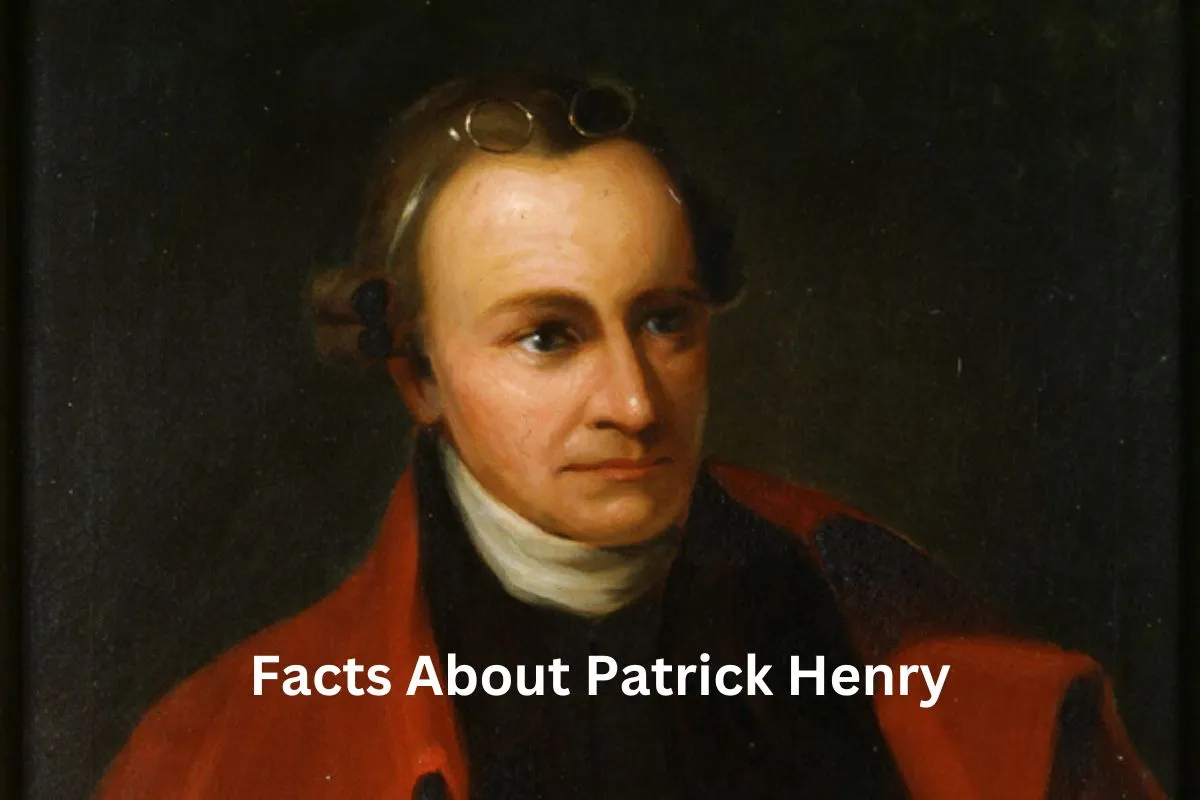 Photo: Patrick Henry, via www.havefunwithhistory.com
She studied at Presbyterian College for Women in Charlotte and eventually made her way to New York City, which in the early 1900s was the closest thing America had to a laboratory for ambitious women who didn't fit the expected mold. She set herself up as an independent inventor — a genuinely unusual thing for a woman to be at the time — and began filing patents.
And almost immediately ran into the wall.
The Wall, and the Cracks In It
The early twentieth century patent system wasn't explicitly designed to exclude women. It didn't need to be. The surrounding infrastructure handled that efficiently enough on its own. Manufacturers preferred to negotiate with men. Investors were more comfortable cutting deals with men. Even the professional networks that connected inventors to licensing opportunities were built around male relationships — clubs, trade associations, informal handshakes over lunch at places women weren't particularly welcome.
A woman with a brilliant invention could receive a patent and still find herself completely locked out of the commercial pipeline that would make it worth anything.
Henry's response to this was not to protest the system loudly — though she had every right to — but to become a student of its mechanics. She learned exactly how the machinery worked, where the leverage points were, and where the gaps were large enough to slip through.
She began working with manufacturing companies directly, sometimes filing patents jointly with male associates who could navigate the commercial relationships she couldn't access. She licensed her inventions through arrangements that kept her financially involved even when her name wasn't the one on the letterhead. She cultivated relationships with manufacturers who were smart enough to recognize that the ideas were coming from her and that cutting her out entirely would mean cutting off the ideas.
It was a strategy born entirely of necessity, and it was more sophisticated than it sounds. She wasn't simply handing her work to men and hoping for the best. She was constructing arrangements that preserved her economic stake while using the social access her male partners provided. The system wanted to make her invisible. She found a way to be invisible and indispensable at the same time.
The Inventions Themselves
It's worth pausing on the work, because the strategy only makes sense in the context of how good the inventions actually were.
Her "Protograph" — the typewriter attachment that created multiple copies without carbon paper — was a genuinely significant contribution to office technology at a time when office work was expanding rapidly and the demand for efficient duplication was enormous. Her umbrella with interchangeable covers sounds frivolous until you realize she was essentially inventing the concept of modular consumer products decades before the term existed. Her improvements to children's toys reflected a careful attention to how small humans actually interact with objects, a kind of observational precision that her contemporaries consistently underestimated.
She was also a restless experimenter who didn't limit herself to a single category. Where most inventors of her era developed expertise in one domain and stayed there, Henry moved freely between domestic products, office equipment, and toys, following her curiosity wherever it led. This made her harder to categorize and easier to dismiss — and also meant that her influence spread across multiple industries simultaneously.
What She Actually Built
By the time Beulah Henry died in 1973, the world she had invented her way through had changed considerably. Women were no longer invisible in the patent system in the same structural way. The commercial networks were at least somewhat more accessible. The "Lady Edison" nickname, which had carried a faint whiff of condescension when it was first applied, had come to feel more like what it always should have been: simple acknowledgment of extraordinary output.
But the most interesting thing about Henry's legacy isn't the patents. It's the model.
She demonstrated, with decades of documented practice, that a rigged game doesn't have to be a losing game. That finding the cracks in a system — the places where the rules are applied inconsistently, where the gatekeepers aren't paying close attention, where a well-structured arrangement can get you inside a door that's technically closed — is its own form of genius. She didn't wait for the rules to become fair. She became an expert in the rules as they existed and built a career inside that expertise.
There's something almost counterintuitive about celebrating this. We'd prefer a story where the unjust system is confronted and defeated, where the hero wins by forcing the wall down. Beulah Henry's story is messier and more instructive than that. She found the gaps. She moved through them. She kept inventing.
And the system, in the end, had to write her name down after all.