They Said the Desert Would Kill the Idea. It Grew Into America's Most Unlikely Sports Dynasty
They Said the Desert Would Kill the Idea. It Grew Into America's Most Unlikely Sports Dynasty
In 1968, when NBA executives announced that Phoenix, Arizona would receive an expansion franchise, the reaction from basketball insiders ranged from skeptical to openly mocking. A professional basketball team in the desert? In a city where summer temperatures routinely hit 115 degrees? In a place where most residents had moved from somewhere else and had no local sports traditions?
 Photo: Phoenix, Arizona, via i.pinimg.com
The critics had a point. Phoenix was still more frontier town than major metropolis, with a population barely cracking 400,000. The city's biggest claim to fame was being a retirement destination for Midwestern retirees seeking warm, dry air for their arthritis.
Fifty-five years later, the Phoenix Suns have become one of the NBA's most enduring franchises, proving that sometimes the most unlikely soil produces the deepest roots.
Building Basketball in a Baseball Town
Phoenix in 1968 was a city still figuring out its identity. The post-war boom had transformed it from a dusty railroad stop into a sprawling metropolis, but its sports culture was virtually nonexistent. Spring training baseball drew some attention, but most residents' sporting loyalties remained tied to teams from wherever they'd moved from—Chicago, Detroit, Cleveland.
The NBA was taking a massive gamble. Professional basketball was still fighting for mainstream acceptance, trailing far behind baseball and football in popularity. Planting a franchise in an unproven market seemed like financial suicide.
But the league's expansion committee saw opportunity where others saw obstacles. Phoenix was one of America's fastest-growing cities, attracting young professionals drawn by aerospace jobs and the promise of year-round sunshine. These transplants were exactly the demographic that might embrace a new team as part of building their new lives.
The Colangelo Revolution
The franchise's early years were predictably rocky. Playing in the cramped Arizona Veterans Memorial Coliseum, the Suns struggled both on the court and at the box office. Season ticket sales limped along, and local media coverage was sparse.
 Photo: Arizona Veterans Memorial Coliseum, via www.zahnarzt-max-kalkhorst.de
Everything changed in 1973 when Jerry Colangelo became general manager at age 28, making him the youngest GM in professional sports. Colangelo understood that building a successful franchise in Phoenix required more than just winning games—it required creating a culture from scratch.
He began by making basketball accessible to a city that barely understood the sport. The Suns launched extensive community outreach programs, sending players to schools and youth centers throughout the Valley. They offered discounted tickets to families and organized basketball clinics in neighborhoods where kids had never seen a professional athlete.
More importantly, Colangelo began drafting and trading for players who could capture the city's imagination.
The Arrival of Thunder and Lightning
In 1976, the Suns acquired Walter Davis, a smooth-shooting guard whose effortless style perfectly matched Phoenix's laid-back desert vibe. Davis became the first Suns player to truly connect with local fans, his jersey appearing throughout the city's shopping malls and playgrounds.
But the real transformation came with the arrival of Paul Westphal as head coach and the development of what became known as "Suns Basketball"—a fast-paced, high-scoring style that reflected the energy of a young, growing city.
The 1976 NBA Finals run changed everything. Facing the heavily favored Boston Celtics, the Suns pushed the series to six games, including a triple-overtime classic in Game 5 that many still consider one of the greatest games in NBA history.
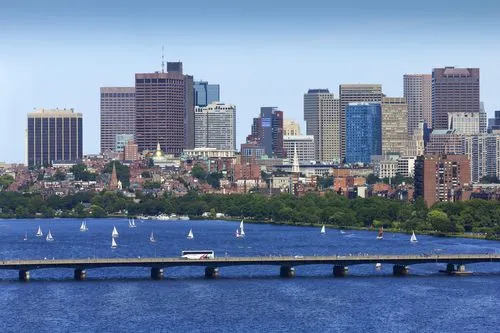 Photo: Boston Celtics, via i.pinimg.com
Sudenly, Phoenix wasn't just supporting a basketball team—they were part of something special.
Desert Heat Becomes Basketball Fever
The late 1980s and early 1990s saw the Suns evolve into legitimate championship contenders. The arrival of Kevin Johnson, Dan Majerle, and eventually Charles Barkley transformed the franchise into "America's Team" for basketball fans who appreciated style and personality.
Barkley's 1993 MVP season and the Suns' run to the NBA Finals created a basketball fever that swept through the desert like a summer monsoon. Bars throughout Phoenix became impromptu viewing parties. Office workers planned meetings around game schedules. The team's orange and purple became as much a part of Phoenix's identity as palm trees and swimming pools.
What made this remarkable was how quickly it happened. Cities like Boston, Philadelphia, and New York had generations to build their sports cultures. Phoenix created theirs in less than two decades, proving that tradition isn't inherited—it's earned.
The Steve Nash Renaissance
Just when the franchise seemed to be settling into mediocrity in the early 2000s, the Suns pulled off another reinvention. The acquisition of Steve Nash in 2004 launched the "Seven Seconds or Less" era—a revolutionary style of basketball that influenced the entire league.
Nash's Suns played basketball like Phoenix lived—fast, innovative, and slightly rebellious. They challenged conventional wisdom about how the game should be played, much like Phoenix had challenged conventional wisdom about where major cities could thrive.
The Nash era produced two MVP awards and some of the most entertaining basketball in NBA history. More importantly, it cemented Phoenix's reputation as a basketball city, attracting free agents and generating national attention that extended far beyond sports.
More Than a Team
Today, the Phoenix Suns are woven into the fabric of a metropolitan area approaching five million residents. Multiple generations have grown up attending games, wearing orange and purple, and understanding that basketball season marks the rhythm of desert life.
The team's recent run to the 2021 NBA Finals—their first Finals appearance in 28 years—demonstrated just how deep those roots have grown. The entire Valley of the Sun shut down for Game 6, with viewing parties in every restaurant, bar, and public space.
The franchise that critics said would never work has become the foundation of Phoenix's sports identity, spawning successful franchises in football, baseball, and hockey. The arena district downtown has become the heart of the city's entertainment scene.
Growing Champions in Unlikely Soil
The Phoenix Suns' story isn't just about basketball—it's about how communities form around shared experiences and how the most unlikely places can become home to the most passionate cultures.
Phoenix was supposed to be too hot, too transient, too new to support professional basketball. Instead, those supposed weaknesses became strengths. The heat created intimate bonds among fans who suffered through summer games together. The transient population embraced the team as a way to put down roots in their new city. The newness meant there were no preconceptions about what Phoenix basketball should be—only possibilities for what it could become.
Fifty-five years later, the franchise that was supposed to fail has become proof that the most enduring dynasties aren't always built in the most obvious places. Sometimes they grow best where nobody expects them to survive at all.