From Stammering Shame to Radio Gold: The Voice That Almost Never Was

The Boy Who Couldn't Say His Own Name
In the spring of 1923, a seventeen-year-old stood frozen at the front of his high school English class in Cedar Rapids, Iowa. The assignment was simple: recite a poem from memory. But for young Paul Harvey, even saying "good morning" was an ordeal that twisted his tongue into knots and sent his classmates into fits of barely suppressed laughter.
 Photo: Cedar Rapids, Iowa, via www.worldatlas.com
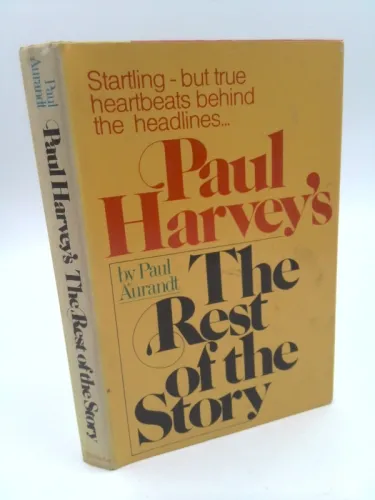 Photo: Paul Harvey, via pictures.abebooks.com
His stutter was so severe that ordering food at a restaurant became an exercise in humiliation. Teachers learned not to call on him. His own mother, though loving, would finish his sentences out of mercy—and impatience. When the high school guidance counselor suggested he consider a career in manual labor, Harvey nodded in silent agreement. Words, it seemed, would never be his friends.
Yet thirty years later, that same voice would reach 24 million Americans every day. Paul Harvey Aurandt—who would drop his last name for radio—became the most listened-to broadcaster in American history, his distinctive cadence and theatrical pauses turning mundane news into compelling drama. The boy who couldn't finish a sentence became the man who perfected the art of the perfectly timed pause.
When Failure Became a Teacher
Harvey's path to radio royalty wasn't straight. After high school, he bounced between odd jobs—shoe salesman, telegraph operator, even a brief stint as a would-be actor. Each role ended the same way: his stutter would emerge at crucial moments, sabotaging interviews and presentations. By his early twenties, he'd been fired from more jobs than most people apply for in a lifetime.
The turning point came at KVOO in Tulsa, where Harvey talked his way into an unpaid internship by promising to work for free. The station manager, perhaps feeling sorry for the stammering young man, assigned him to the graveyard shift—midnight to 6 AM, when few people listened and fewer cared if the announcer stumbled over words.
But something magical happened in those empty hours. Without the pressure of a live audience, Harvey began to experiment. He discovered that his stutter disappeared when he slowed down, when he treated each word like a deliberate choice rather than a hurried necessity. More importantly, he realized that his childhood struggle had given him something most announcers lacked: an intimate understanding of the weight words could carry.
The Pause That Changed Everything
Harvey's signature style—those dramatic pauses that became known as "Harvey's holes"—wasn't born from confidence but from necessity. Originally, they were moments when he gathered himself, making sure the next words would come out cleanly. But listeners interpreted them differently. They heard thoughtfulness, gravity, suspense.
"Good... morning... Americans," became his trademark opening, each word separated by a beat that seemed to pull listeners closer to their radios. Where other announcers rushed through copy, Harvey lingered. Where they shouted, he whispered. Where they spoke to the masses, he seemed to speak to each listener individually.
By the 1940s, Harvey had transformed his impediment into his greatest asset. His "News and Comment" program didn't just report events—it made them feel personal, immediate, important. When he said "And now... you know... the rest of the story," millions of Americans leaned forward, hungry for whatever revelation was coming.
The Voice of Middle America
What made Harvey's success so remarkable wasn't just that he overcame a speech disorder—it was how completely he transformed it into an advantage. His childhood struggles had taught him that communication was about more than just words; it was about connection, empathy, timing. The boy who had been mocked for his halting speech became the man who understood better than anyone how to use silence as eloquently as sound.
Harvey's programs reached their peak during the Cold War era, when Americans were hungry for a voice that felt both authoritative and intimate. His conservative commentary and celebration of traditional values resonated with listeners who felt disconnected from the rapid changes around them. But it was his delivery—that careful, measured cadence born from years of struggling with words—that made him irreplaceable.
Critics sometimes dismissed Harvey as hokey or old-fashioned, but they missed the deeper truth: his success came from authenticity born of adversity. Every pause, every carefully chosen word, carried the weight of someone who had fought for the right to be heard.
The Legacy of an Unlikely Voice
When Paul Harvey died in 2009 at age 90, he had been on the air for more than seven decades. His programs were carried by 1,200 radio stations, and his audience was estimated at 24 million listeners. Presidents sought his endorsement. Advertisers paid premium rates for his personal recommendations. A man who once couldn't order a hamburger without embarrassment had become one of the most influential voices in America.
But perhaps Harvey's greatest achievement wasn't commercial—it was personal. He proved that our deepest struggles often contain the seeds of our greatest strengths. The stutter that nearly silenced him became the foundation of a style so distinctive that imitators still try to capture it today.
In an age of rapid-fire communication and endless chatter, Harvey's story reminds us that sometimes the most powerful voice belongs not to those who speak easily, but to those who have fought for every word. His journey from stammering shame to radio gold proves that the longest path to success often becomes the most meaningful one.
The boy who couldn't say his own name became the man whose voice defined American broadcasting. And now... you know... the rest of the story.