When Failure Taught Him How to Win

The Golden Boy Who Turned to Lead
Billy Beane was 18 years old when the New York Mets offered him $125,000 to skip Stanford and sign a professional contract. It was 1980, and that kind of money said everything about what the scouts saw in him: speed, power, arm strength, fielding ability, and the kind of natural baseball instincts that couldn't be taught.
 Photo: New York Mets, via c8.alamy.com
 Photo: Billy Beane, via stagbite.com
He was the prototype five-tool player, the kind of prospect that made general managers dream of pennants and Hall of Fame plaques. The Mets' scouts had watched him dominate high school baseball in Southern California and seen the future of their franchise.
They were wrong about almost everything.
Beane spent six years bouncing between the minors and majors, playing for four different organizations, hitting .219 in 148 major league games. He struck out constantly, couldn't hit a curveball, and discovered that all those tools meant nothing if you couldn't use them when it mattered.
By 1989, he was out of baseball entirely, another cautionary tale about the difference between potential and performance.
The Sting of Being Ordinary
What made Beane's failure particularly brutal wasn't just that he didn't become a star—it was that he wasn't even close. He wasn't a marginal major leaguer who carved out a useful career. He was a complete bust, the kind of player who made scouts question their ability to evaluate talent.
The psychological impact was devastating. Beane had been told since Little League that he was special, that baseball success was his birthright. When that narrative collapsed, it took his sense of identity with it.
But failure taught him something that success never could have: how to see the game without the romance.
When you're a prospect, baseball is about potential and projection. When you're a washout, it's about cold, hard numbers. Beane learned to see through the mythology that had once surrounded him and focus on what actually predicted success.
The Accidental Executive
In 1990, the Oakland Athletics offered Beane a job as an advance scout—the kind of position teams typically gave to former players who couldn't find work elsewhere. It wasn't glamorous, but it kept him in the game.
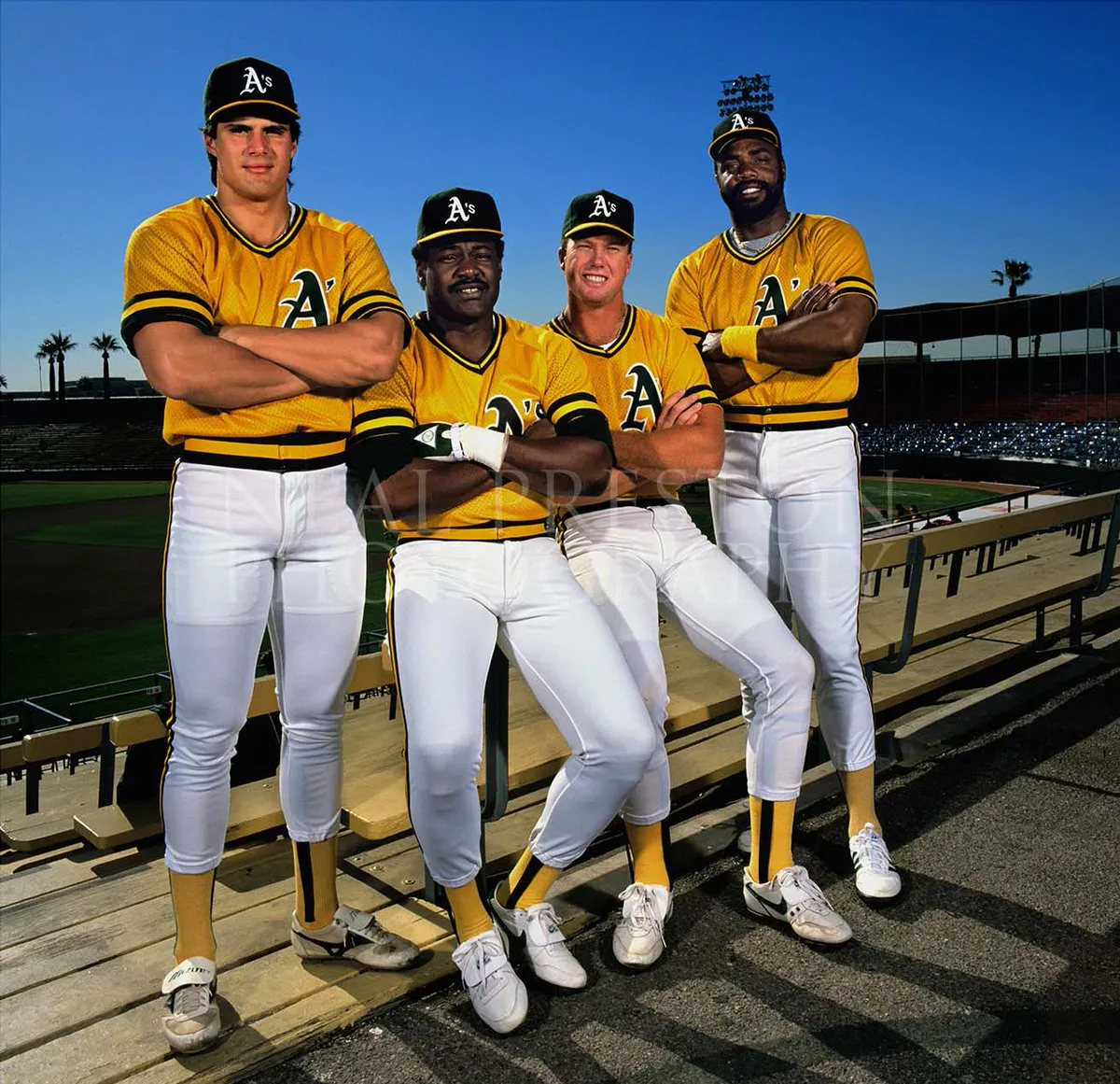 Photo: Oakland Athletics, via lh3.googleusercontent.com
Beane threw himself into the work with the intensity of someone who had something to prove. He studied opposing teams, analyzed tendencies, and began to notice patterns that others missed.
More importantly, he started questioning the conventional wisdom that had once made him a top prospect. If the scouts had been so wrong about him, what else were they wrong about?
He began working with Bill James, a baseball analyst whose statistical approach to the game was considered radical by most front offices. James argued that traditional scouting metrics—the things that had made Beane a prospect—were often poor predictors of actual performance.
The Laboratory of Desperation
In 1997, Beane became general manager of the Oakland Athletics, inheriting one of baseball's smallest payrolls and a mandate to compete against teams that spent three times as much money.
Conventional wisdom said it couldn't be done. You needed star players to win, and star players cost money the A's didn't have.
But Beane's playing failure had taught him to distrust conventional wisdom. Instead of trying to outspend the Yankees and Red Sox, he decided to out-think them.
Working with assistant Paul DePodesta, Beane built a system that identified undervalued players—guys who got on base, drew walks, and contributed to wins in ways that didn't show up in traditional statistics.
The approach was revolutionary not because it used statistics—every team had numbers. It was revolutionary because it ignored the subjective judgments that had once made Beane a prospect and focused entirely on objective results.
David vs. Goliath, With Spreadsheets
The 2002 Oakland Athletics won 103 games and the American League West title despite having the third-lowest payroll in baseball. They did it with a roster of players other teams had overlooked: college players who walked too much, veterans who were considered past their prime, and position players who didn't look like traditional stars.
The success wasn't just about finding bargains. It was about understanding that baseball talent was systematically mispriced because teams were making decisions based on outdated assumptions.
Beane had learned from his own failure that what looked impressive in batting practice didn't always translate to game situations. The same principle applied to building a roster: the players who looked like stars weren't always the ones who helped you win.
The Revolution That Started With a Strikeout
The "Moneyball" approach spread throughout baseball, fundamentally changing how teams evaluate and acquire talent. Analytics departments became standard, and the statistical principles Beane pioneered influenced everything from draft strategy to in-game decision-making.
But the real revolution wasn't statistical—it was philosophical. Beane proved that systematic thinking could overcome traditional advantages, that intelligence could compete with resources, and that failure could be the best teacher of all.
His playing career had lasted six years and accomplished nothing. His front-office career changed the sport forever.
The Wisdom of Washouts
Billy Beane's story illustrates something that successful athletes rarely learn: sometimes the most valuable perspective comes from the bottom looking up, not the top looking down.
If he had become the star everyone predicted, he probably would have trusted the system that produced him. His failure forced him to question everything, to see the game's inefficiencies and contradictions.
The scouts who signed him saw tools and potential. The general manager he became saw production and value. The difference between those perspectives revolutionized America's pastime.
Sometimes the best way to understand how something works is to experience how it doesn't work. Billy Beane's greatest failure became baseball's greatest lesson: the game isn't always won by the players who look like winners.
It's won by the people smart enough to figure out what winning actually looks like.