Every Door Memphis Slammed Sent Him Deeper Into the Music
There's a version of the Sam Phillips story that starts with Elvis Presley walking into a recording studio and ends with rock and roll conquering the world. That version is true, as far as it goes. But it skips the part where a kid from rural Alabama spent years being turned away, running out of money, and talking himself into opportunities that barely existed — and how all of that rejection accidentally handed him something no established industry insider could have built.
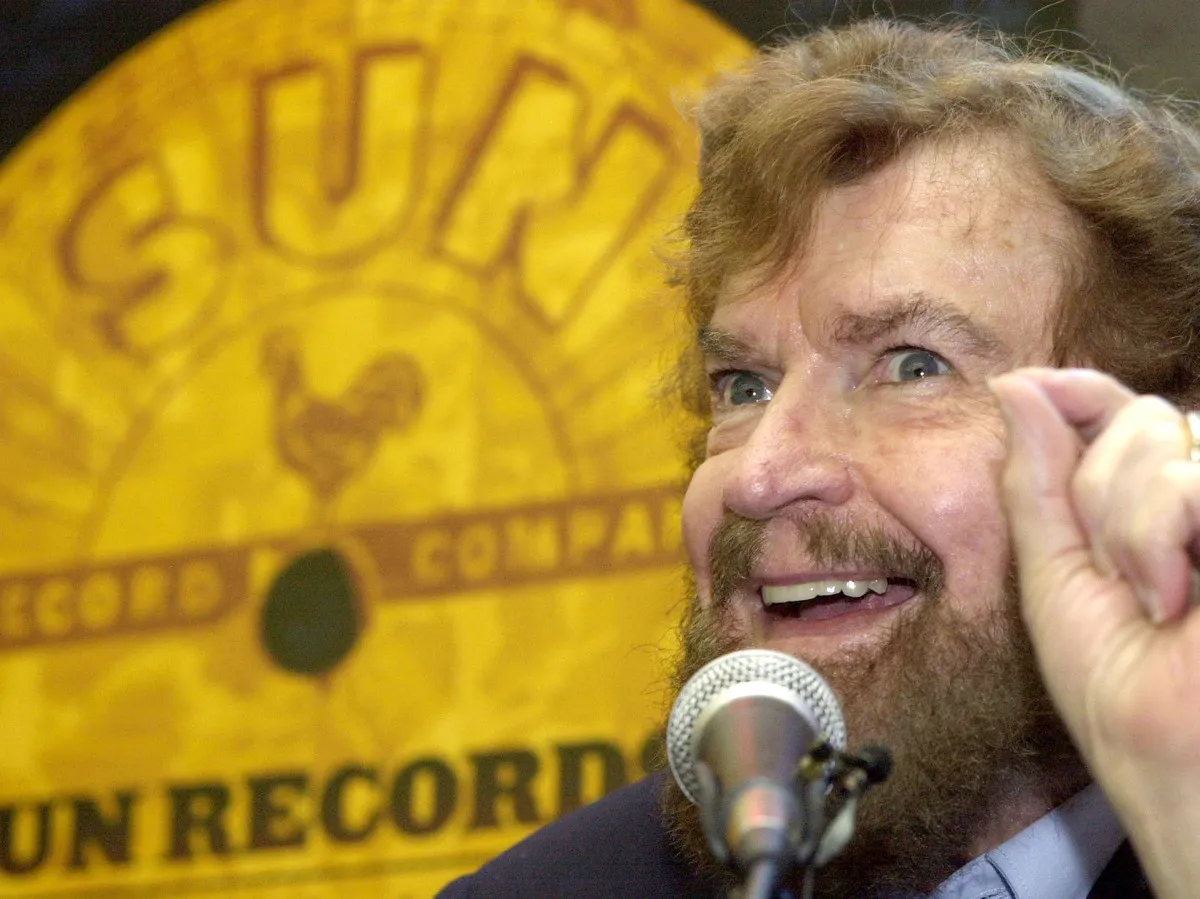 Photo: Sam Phillips, via media.npr.org
It handed him freedom.
Florence, Alabama, and the Long Way Out
Sam Phillips was born in 1923 in Florence, Alabama, the youngest of eight children. His family farmed cotton. Money was scarce in the way that leaves marks — the kind of scarcity that makes a kid pay close attention to every possible exit from a life defined by what you don't have.
Phillips found his exit in sound. Radio, specifically. He was transfixed by it — by the idea that a voice could travel invisible through the air and land inside someone's living room a hundred miles away. He taught himself the technical side, studied broadcasting, and set his sights on a career that would take him somewhere the cotton fields couldn't follow.
What he didn't anticipate was how long the road would be, or how many people would tell him to turn around.
The Radio Dream and Its Complications
Phillips worked his way into radio through a series of small-market stations in the South, eventually landing at WREC in Memphis in the mid-1940s. He was good at it. He had an ear for sound that went beyond technical competence — he could hear what was wrong with a signal, what was missing from a broadcast, what a room sounded like before and after you moved a microphone six inches to the left.
But radio in that era was a closed system. The good jobs, the network affiliates, the positions that actually paid — those went to men with the right connections and the right résumés. Phillips had talent and hunger, which is a combination that gets you only so far when the door is locked from the inside.
So he looked for another door.
The Radiator Shop on Union Avenue
In 1950, Phillips opened the Memphis Recording Service in a converted radiator shop at 706 Union Avenue. The space was small. The equipment was secondhand. The business model was, to put it charitably, optimistic — he would record anyone who needed recording: weddings, funerals, local musicians, anyone willing to pay a few dollars for a custom acetate.
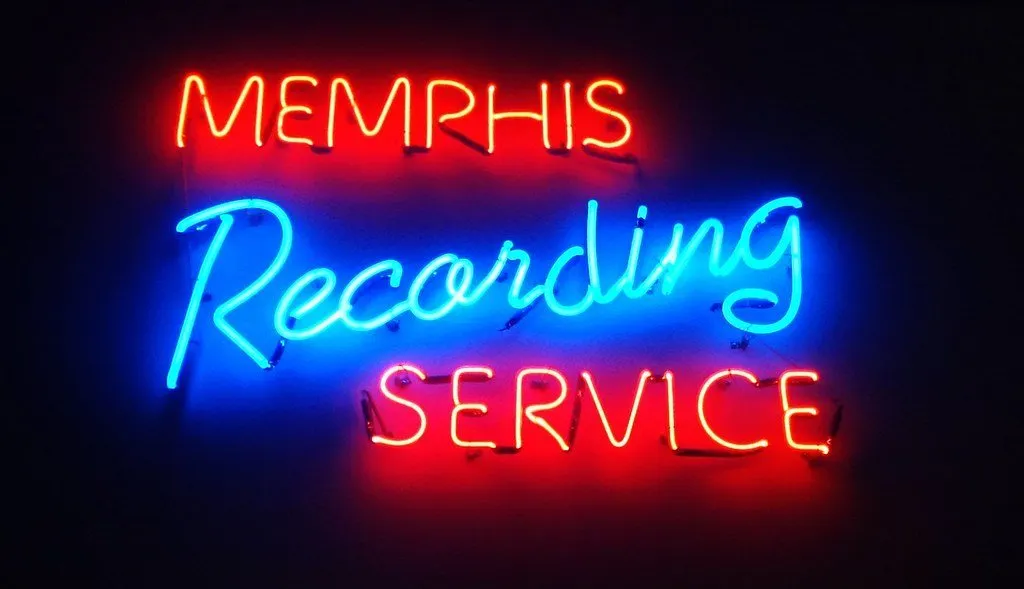 Photo: Memphis Recording Service, via www.usaneonsigninc.com
It was not, by any conventional measure, a promising venture.
What it was, though, was completely his. No network executives. No program directors. No format consultants telling him what sounded right and what didn't fit the brand. In that converted radiator shop, Phillips could record whatever he thought was worth recording — and what he thought was worth recording was the music that the established labels in New York and Nashville were systematically ignoring.
Blues. Gospel. The raw, unpolished sound of musicians who had never been told what a recording was supposed to sound like because nobody had ever offered to record them before.
Howlin' Wolf and the Sound Nobody Wanted
Before Elvis, before Johnny Cash, before any of the names that would eventually make Sun Records famous, there was Howlin' Wolf.
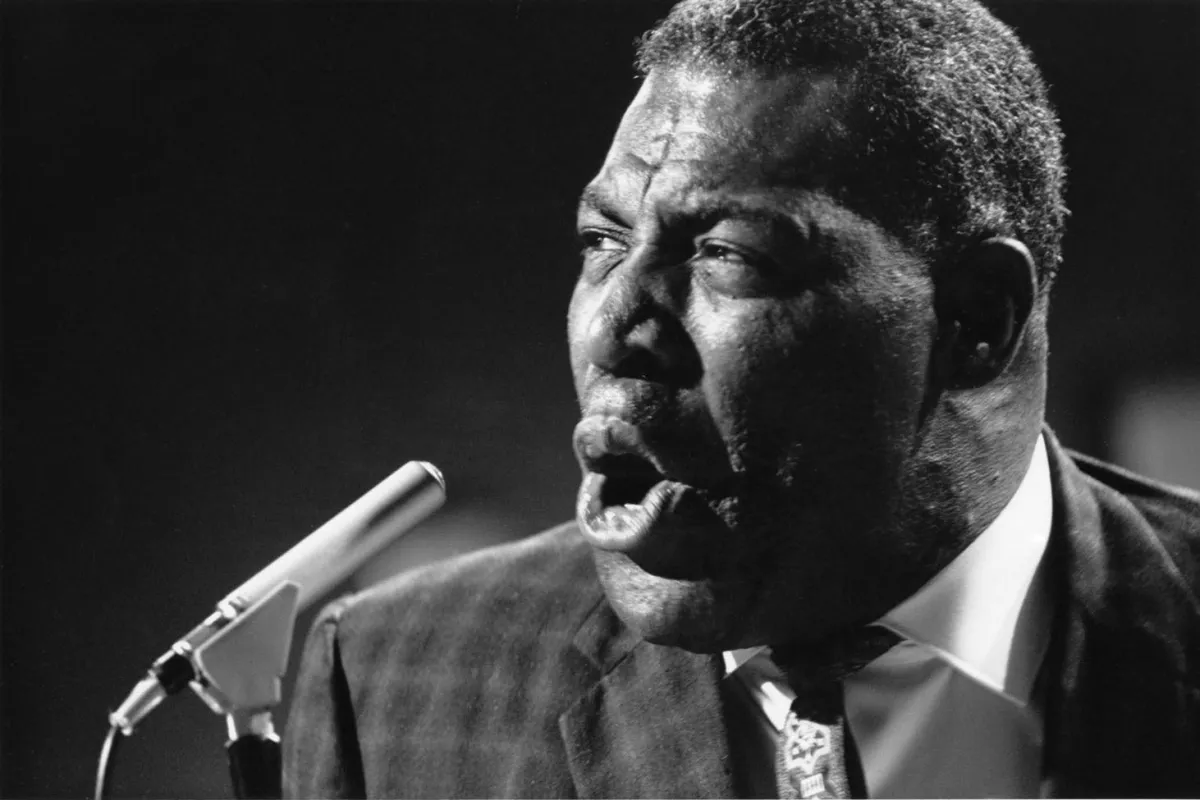 Photo: Howlin' Wolf, via cdn.britannica.com
Chester Arthur Burnett — the man who would become Howlin' Wolf — was a Mississippi Delta blues singer with a voice that sounded like it was being dragged over gravel. He was not the kind of artist that major labels in 1951 were lining up to sign. He was too raw, too strange, too regional, too Black for the mainstream market that the industry was chasing.
Phillips recorded him anyway. He heard something in that voice that he couldn't explain in commercial terms, only in honest ones: it was real. It was unlike anything else. It deserved to exist on tape.
The recordings he made of Howlin' Wolf — and of B.B. King, and of Rufus Thomas, and of a dozen other artists who had nowhere else to go — were not just historically significant. They were the proof of concept for everything that came after. Phillips had developed an instinct, in that little studio, for capturing a certain kind of truth on tape. An unpolished, unmediated truth that the slick studios in bigger cities were actively trying to edit out.
The Kid Who Walked In Off the Street
In the summer of 1953, a teenager named Elvis Presley paid four dollars to record two songs as a birthday present for his mother. Phillips wasn't there that day. His assistant made a note: Good ballad singer. Hold.
Phillips held. Almost a year later, he called Elvis back in.
What happened in that studio over the following months is one of the most written-about moments in American music history. But what's worth sitting with is why it happened there, in that particular building, with that particular man behind the glass.
It happened because every institution that had failed to make room for Sam Phillips had inadvertently built him into someone who understood, at a cellular level, what it felt like to have something real to offer and nowhere to offer it. He recognized that feeling in the musicians who came through his door. He knew how to make space for it.
The major labels weren't looking for Elvis Presley in 1954. They were looking for what had already worked. Phillips wasn't looking for what had already worked. He was looking for what was true.
What the Margins Knew
Sun Records — the label Phillips eventually built from the Memphis Recording Service — launched careers that the established music industry would spend years trying to catch up to. Elvis. Johnny Cash. Jerry Lee Lewis. Carl Perkins. Roy Orbison. The list reads like a syllabus for American music history.
None of it was inevitable. All of it traces back to a string of closed doors and a man who stopped knocking and started building his own room.
The music industry in 1950 knew exactly what it wanted and exactly who it was willing to listen to. Sam Phillips, standing outside that system with a secondhand tape machine and a converted radiator shop, turned out to know something the industry didn't: that the most important sounds were coming from the people nobody was bothering to record.