Lost on Purpose: The Runaway Who Learned to Read the West Like a Book
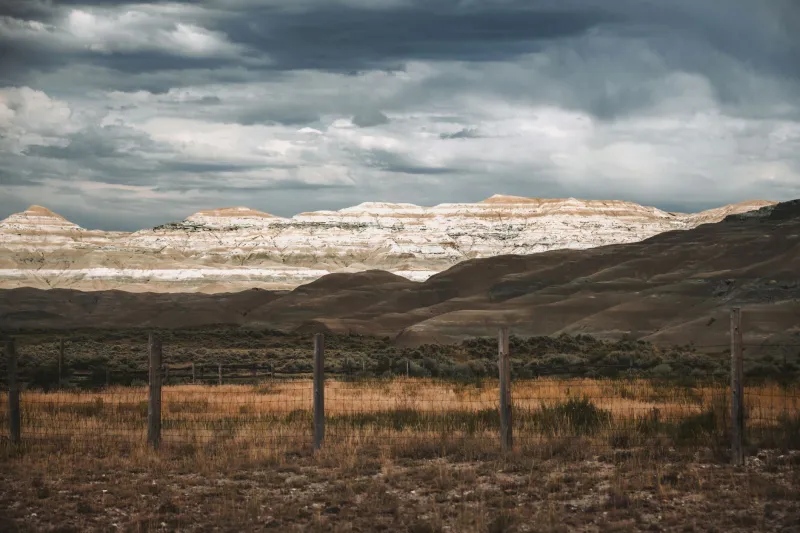
In 1826, a Missouri saddler named David Workman placed a classified ad in the Franklin newspaper. It described a runaway apprentice — fifteen years old, slight build, barely literate — and offered a one-cent reward for his return. One cent. Whether that reflected the boy's perceived value or the shop owner's sense of humor is lost to history. What we do know is that nobody collected. The boy was gone, and he had no intention of coming back.
That boy was Christopher Houston Carson. The world would eventually call him Kit.
The Wrong Start
Kit Carson was born in Kentucky in 1809, the sixth of ten children, and raised on the Missouri frontier after his father moved the family west. His father died when Kit was nine, leaving the household in perpetual scramble mode. Formal schooling was a luxury the Carsons couldn't afford, and Kit spent his childhood doing what frontier children did — working, watching, surviving. He was apprenticed to a saddler in his early teens, which was meant to give him a trade and a future.
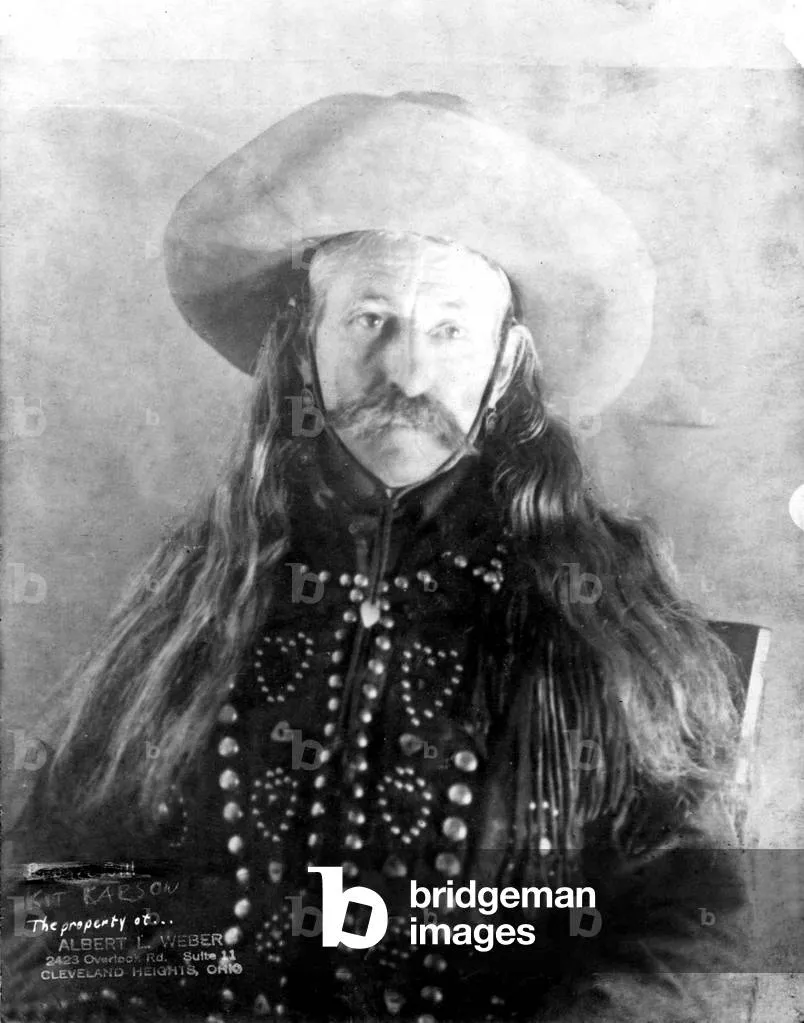 Photo: Kit Carson, via images-cdn.bridgemanimages.com
He hated it.
The saddlery was indoors. It smelled of leather and oil and repetition. Outside, wagon trains were rolling west along the Santa Fe Trail, and the men driving them brought back stories that made a boy's chest ache with wanting. So Kit Carson did what restless boys with nothing to lose sometimes do: he walked away.
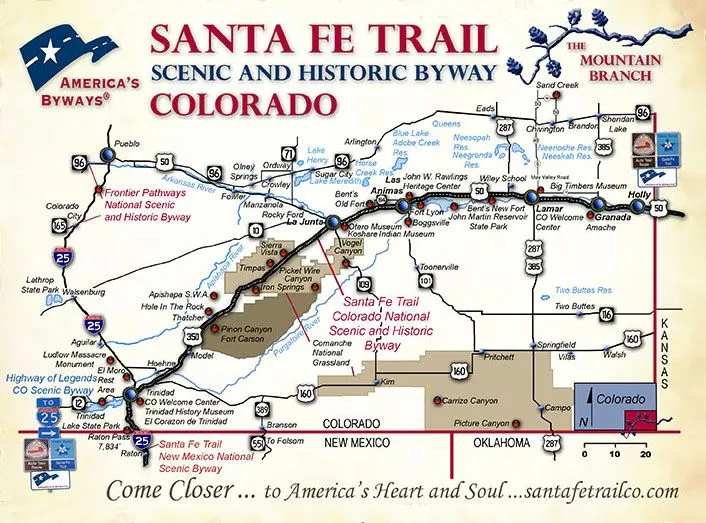 Photo: Santa Fe Trail, via www.legendsofamerica.com
On paper, this was a disaster. He had no money, no formal training, and couldn't read well enough to write a decent letter. He was heading into one of the most unforgiving landscapes on the continent. Every sensible person in Franklin, Missouri, probably agreed: that boy was going to get himself killed.
An Education Without Walls
What happened instead was stranger and more interesting than anyone predicted. Carson attached himself to a trading caravan heading for Santa Fe and spent the next several years doing something that looked, from the outside, like wandering. He drifted through Taos, through the Rocky Mountain fur trade, through the brutal seasonal rhythms of trapping beaver in streams that froze solid by October. He nearly starved more than once. He learned to navigate by stars and landmarks and the behavior of animals. He picked up Spanish, then Navajo, then Cheyenne, then pieces of half a dozen other languages — not from books, but from necessity and proximity.
He was getting lost constantly, in the most productive way imaginable.
Each wrong turn taught him something about the terrain. Each winter camp, each river crossing gone sideways, each near-miss with a grizzly or a hostile raiding party deposited another layer of knowledge that no map could contain and no school could teach. By his late twenties, Carson had accumulated a mental atlas of the American West that was essentially unmatched. He knew which mountain passes were navigable in February. He knew where water hid in country that looked bone-dry. He knew how to read weather in the color of a morning sky.
None of this was intentional. It was just what happened when you were too stubborn to go home and too curious to stand still.
The Man Who Made Frémont Famous
In 1842, an Army officer named John C. Frémont was preparing to lead an expedition to map the Oregon Trail. He needed a guide. At a chance meeting on a steamboat, someone pointed him toward a quiet, soft-spoken man in buckskin who didn't say much but seemed to know exactly where he was at all times. Frémont hired Kit Carson on the spot.
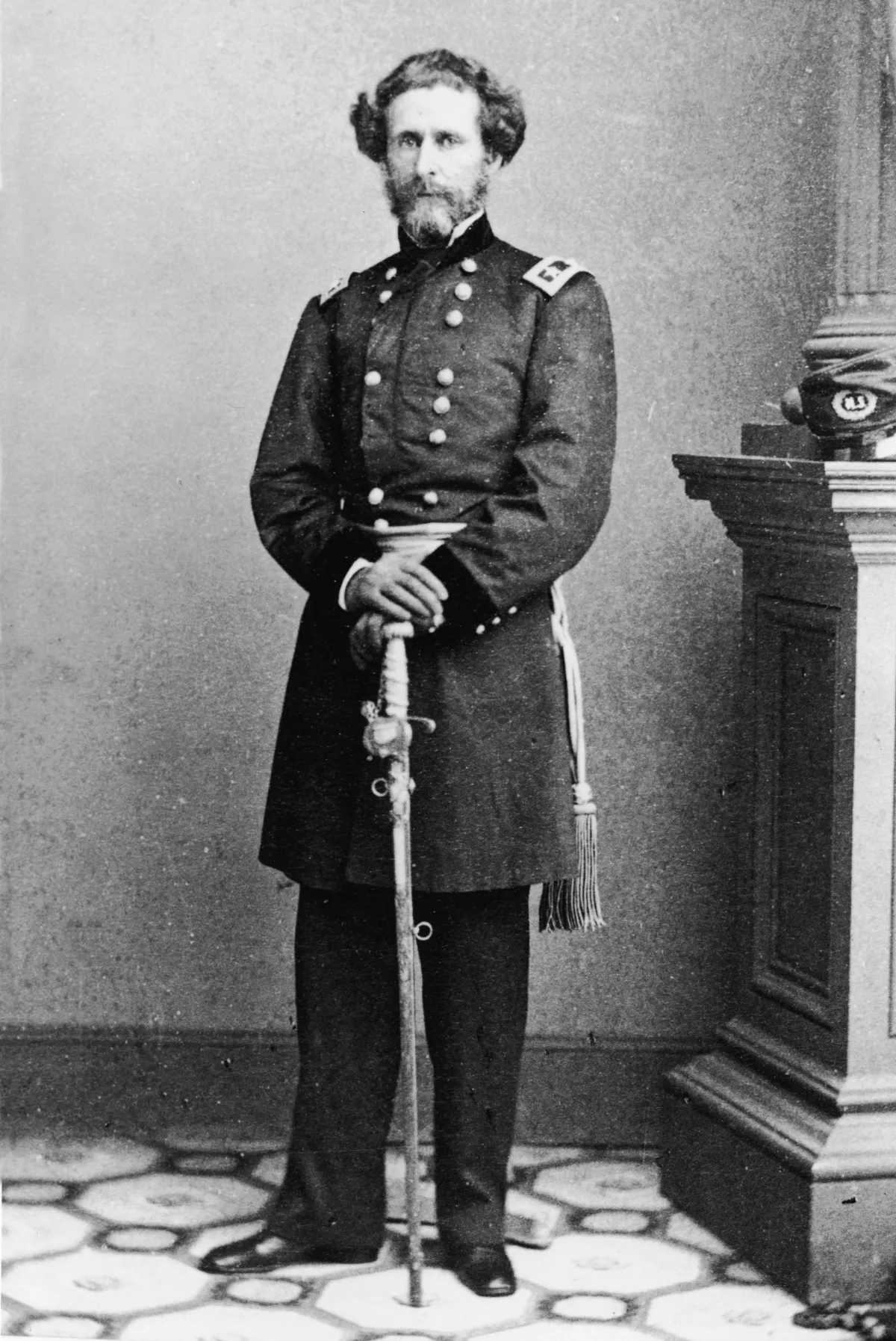 Photo: John C. Frémont, via images.squarespace-cdn.com
It was one of the most consequential chance encounters in American exploration history.
Over the next several years, Carson guided Frémont on three major expeditions — through the Rockies, across the Sierra Nevada, into California and Oregon. Frémont's published reports, which became bestsellers and helped ignite the westward migration that defined mid-nineteenth century America, credited Carson repeatedly and extravagantly. Frémont called him the most capable man he had ever met in the wilderness. Newspapers picked up the name. Dime novelists ran with it. Kit Carson became, somewhat to his own bewilderment, a legend.
But here's the thing that gets overlooked in the mythology: what made Carson extraordinary wasn't heroism in the Hollywood sense. It was competence born from years of apparent failure. It was the fact that he had been lost so many times that he had developed an almost supernatural ability to find his way. His poor formal education meant he had never learned to trust a map more than his own eyes. His inability to settle meant he had covered more ground, in more seasons, under more conditions, than almost any other living person.
The liabilities listed in that one-cent newspaper ad — the wandering, the restlessness, the lack of formal credentials — were precisely the qualities that made him irreplaceable.
What the Wrong Life Prepares You For
Carson's story isn't a straight line from hardship to triumph. His later years were complicated — he was involved in conflicts with Native peoples that history rightly views with a critical eye, and his own feelings about those events were reportedly troubled. He was a man of his time, shaped by forces larger than himself, and the full picture of his life resists easy heroism.
But the early arc of that life — the runaway, the drifter, the man who seemed to be going nowhere for years at a time — offers something worth sitting with. There's a particular kind of preparation that doesn't look like preparation at all. It looks like wandering. It looks like wrong turns and wasted years and a one-cent reward that nobody bothered to claim.
Kit Carson spent his adolescence and early adulthood doing everything the respectable world told him not to do, and accumulating everything the respectable world had no way to teach him.
Sometimes the path that looks most like getting lost is the one that leads somewhere no one else could follow.