The Man Nobody Wanted Built the Building That Changed Everything
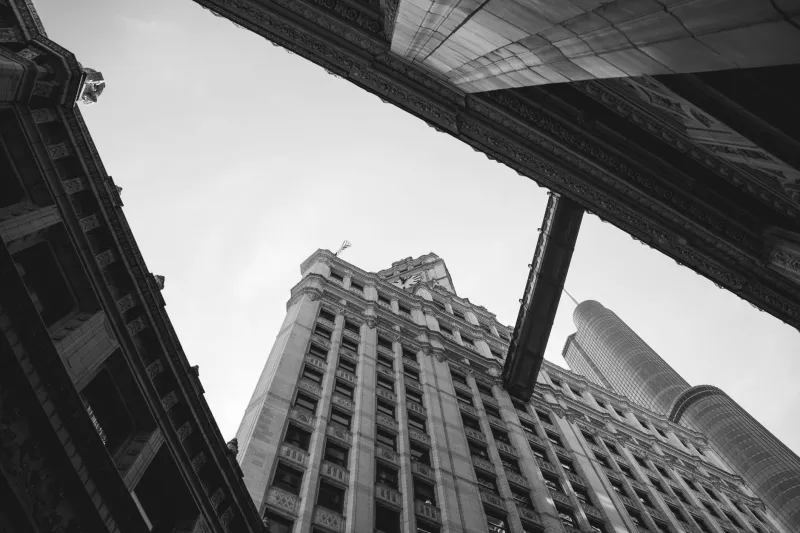
Chicago in the 1880s was a city in a hurry. It had burned nearly to the ground in 1871, and it was rebuilding with a kind of furious, almost reckless ambition. New money was flooding in. Business was booming. And the architects who landed the great commissions — the civic halls, the grand hotels, the gleaming office blocks along Michigan Avenue — were men with famous names, East Coast connections, and the right club memberships.
John Wellborn Root had none of those things.
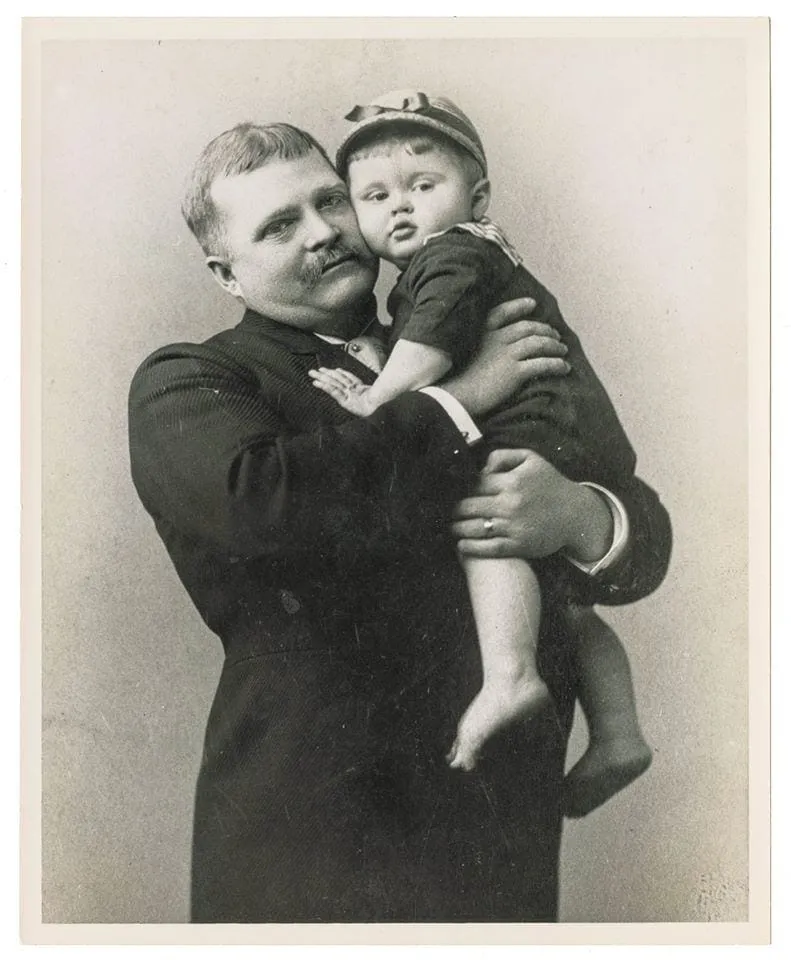 Photo: John Wellborn Root, via substackcdn.com
What he had was a drafting table, a business partner named Daniel Burnham, and a mind that couldn't stop turning over a single stubborn question: how do you build tall on ground that doesn't want to hold anything up?
The Wrong Man for the Right Problem
Root was born in Georgia in 1850, the son of a merchant who lost nearly everything in the Civil War. He studied in England, then at NYU, then scratched his way into a few minor architectural positions before landing in Chicago in 1871 — the same year the fire erased the city's past and dared someone to invent its future.
He and Burnham set up a firm together. Burnham was the salesman, the glad-hander, the man who could walk into a room and make wealthy clients feel like they'd already made the right decision just by hiring him. Root was the one who stayed behind and figured out how to make the buildings actually stand up.
It was not, at first, a glamorous arrangement. The big names — McKim, Mead and White in New York; Richardson in Boston — weren't losing sleep over Burnham and Root. The firm picked up work where it could. Commercial buildings. Warehouses. Office blocks for clients who wanted something functional and weren't too particular about prestige.
And that, as it turned out, was exactly the kind of work that needed solving.
The Ground Beneath the Dream
Chicago sits on clay. Not the solid, load-bearing kind that lets you sink a foundation and forget about it — the soft, shifting, water-logged kind that swallows weight and settles unevenly under anything heavy. The city's early tall buildings had a tendency to sink. Sometimes dramatically. It was the architectural equivalent of building on quicksand, and it was quietly terrifying to anyone who thought seriously about it.
Root thought seriously about it.
For the Montauk Building, completed in 1882, he developed what became known as the floating foundation — a continuous raft of steel rails and concrete that spread the building's weight across the soft ground rather than concentrating it in isolated points. It sounds elegant in retrospect. At the time, it was a radical gamble that most of the celebrated architects of the era weren't being asked to take because they weren't building in Chicago's commercial trenches.
But Root was. And the Montauk held.
Then came the Rookery Building, finished in 1888, with its soaring light court and its iron-and-masonry hybrid structure. Then the Monadnock Building, whose clean, unornamented brick exterior was so far ahead of its time that critics initially dismissed it as blunt and graceless. They would spend the next century reconsidering that judgment.
What Obscurity Gave Him
Here is the thing about being kept off the biggest stages: nobody is watching you closely enough to tell you what you can't do.
Root didn't have clients demanding Gothic Revival facades or Beaux-Arts flourishes because those clients were hiring someone else. He had clients who needed buildings that worked — that stood up, let in light, moved people efficiently through their floors, and didn't embarrass anyone. The constraints were practical, not aesthetic. And practical constraints, it turns out, are a remarkably good incubator for structural innovation.
He was solving engineering problems that the more celebrated architects of his era never had to face. And in solving them, he was quietly laying the conceptual groundwork for the American skyscraper — the load-bearing metal frame, the curtain wall, the deep foundation system that would eventually allow buildings to climb thirty, forty, fifty stories into the air.
He didn't get credit for most of it. Not right away.
The Partnership That Made the World's Fair
By the late 1880s, Burnham and Root had built enough of Chicago to be taken seriously. When the city landed the 1893 World's Columbian Exposition — the event that would introduce America to itself as a modern nation — Burnham was named director of works. Root was made consulting architect.
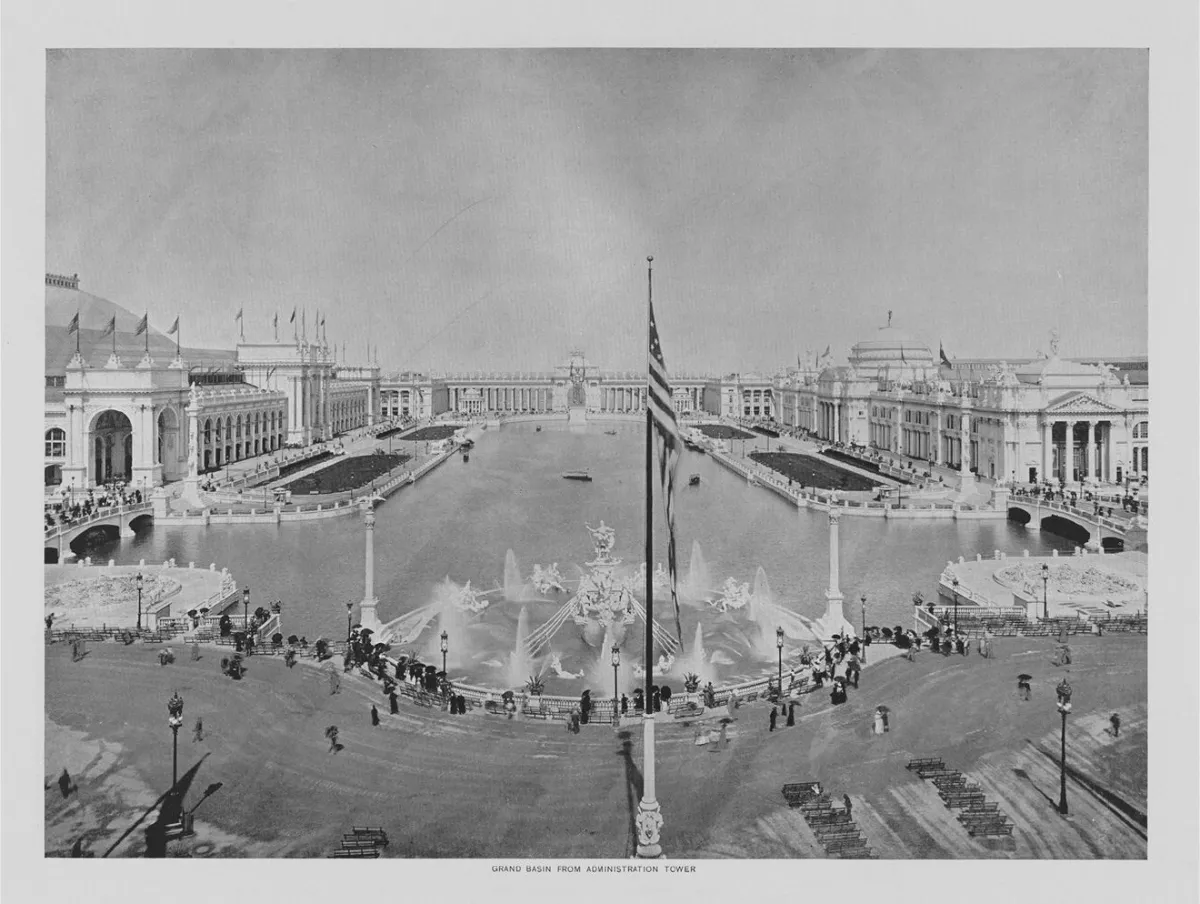 Photo: World's Columbian Exposition, via s3.amazonaws.com
It was the biggest commission in American history. And Root never saw it finished.
He died of pneumonia in January 1891, at forty-one years old, before the fair's buildings rose from the marshland south of the city. Burnham pressed on, brought in the East Coast names Root had always been measured against, and delivered a White City that stunned the world.
History, in its usual careless way, gave Burnham most of the credit.
The Buildings That Stayed
But buildings outlast reputations. The Rookery still stands on LaSalle Street, its lobby later remodeled by Frank Lloyd Wright, who understood exactly what Root had accomplished there. The Monadnock still stands on Dearborn, its sixteen stories of load-bearing brick a monument to a structural logic that was already becoming obsolete even as it was being perfected — because the steel-frame principles Root had helped develop were about to replace it entirely.
The irony is sharp. Root spent his career outside the charmed circle of celebrated American architecture, building commercial blocks for clients who wanted function over grandeur. And in doing so, he worked out the problems that made modern American cities possible.
The skylines that define Chicago, New York, Houston, and a hundred other American cities carry his fingerprints. Not his name — his fingerprints. The structural logic, the engineering honesty, the willingness to let a building be exactly what it needed to be rather than what tradition demanded.
That's the thing about the uneven path. It doesn't always lead where you expected. But sometimes it leads somewhere no straight road could have taken you.