The Hand He Lost Taught Him Every Language He'd Ever Need
The Hand He Lost Taught Him Every Language He'd Ever Need
There is a particular kind of education that no university offers. It doesn't come with a certificate or a letter of recommendation. It comes from loss — from the specific, gutting experience of watching the life you planned disappear and having to build a completely different one from whatever scraps remain.
For the boy who would one day sit across from foreign ministers and heads of state, that education began on a fishing dock in Massachusetts, and it cost him everything — twice.
Born at the Edge of the Atlantic
His father had come over from the Azores the way so many Portuguese immigrants did in the early decades of the twentieth century: with a strong back, a vague promise, and an address scrawled on a piece of paper. The family settled in a tight-knit waterfront community where the men worked the boats and the women worked everything else. English was a second language in their household — sometimes a third. The boy grew up code-switching before anyone had a word for it, slipping between Portuguese at the dinner table, broken English at school, and the wordless shorthand of a fishing crew before he was old enough to shave.
 Photo: the Azores, via c8.alamy.com
That early fluency — not just in language but in reading people across cultural lines — was something he couldn't have named at the time. It was just life. It was just Tuesday.
Then the accident happened.
The First Catastrophe
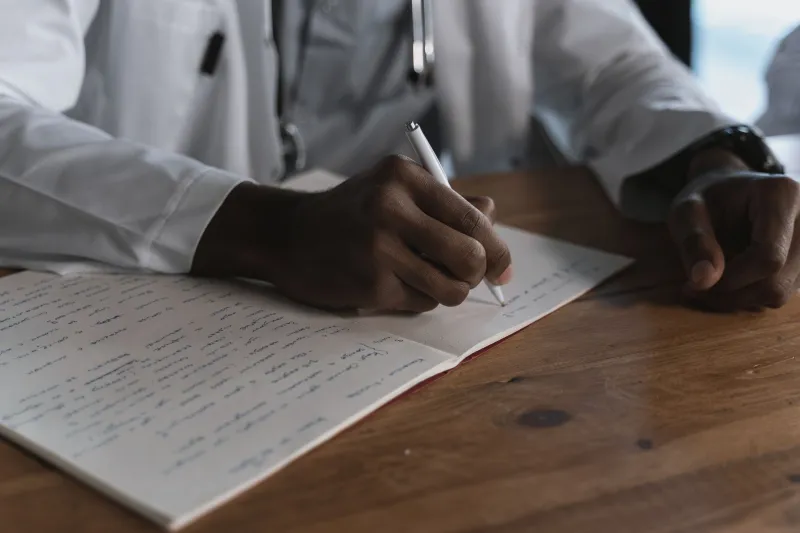
The details vary depending on which account you trust, but the outcome doesn't: a mechanical failure on the docks, a moment of terrible bad luck, and the dominant hand he'd used for everything — hauling line, writing his name, imagining a future in the trades — was gone. He was barely out of his teens.
For most young men in that community, at that time, that would have been the end of the story. The waterfront didn't have much use for a one-handed laborer, and neither did most of the industries available to the son of an immigrant fisherman. He spent months in a kind of suspended grief, the sort that isn't dramatic enough to look like grief from the outside but hollows you out just the same.
What pulled him through wasn't a plan. It was curiosity — and a public library.
The Self-Made Linguist
With physical labor no longer an option, he turned to books the way some people turn to religion: desperately, completely, and with a convert's intensity. He taught himself to read and write left-handed. He studied Spanish, then French, then Italian — not in a classroom but from borrowed grammars and conversations with anyone willing to talk. He had a gift for it, the kind of gift that only reveals itself when circumstance strips away every other option.
By his late twenties, he was working as a translator and interpreter, the kind of unglamorous, underpaid work that keeps diplomacy running behind the scenes. He was not the man at the table. He was the man making sure the men at the table understood each other. And in that invisible role, he watched. He learned how negotiations actually worked — not the formal choreography, but the human architecture underneath it. Where pride lived. Where fear hid. What a man's posture meant when his words said something different.
Then the second catastrophe arrived.
The Second Loss
The historical record is incomplete here — it often is for men who didn't come from prominent families — but what's clear is that a professional collapse in his middle years sent him back to zero. A project failed. Connections evaporated. The modest foothold he'd built slipped away. He was middle-aged, immigrant-born, formally uncredentialed, and starting over in a field that rewarded pedigree above almost everything else.
He could have quit. By any reasonable measure, quitting would have been logical.
He didn't quit.
The Table No One Expected Him to Reach
What happened next unfolded slowly, the way most important things do. He rebuilt his reputation through sheer reliability — showing up, delivering, never making the powerful men he worked for look foolish. He moved from translation into cultural mediation, becoming the person called in when formal channels had broken down and both sides needed someone neither side would feel threatened by.
That was his credential. Not a degree from Georgetown. Not a family name. It was the fact that he had lost everything twice and still showed up with a clear head and an open ear. People trusted him, instinctively, in the way you trust someone who has clearly suffered and clearly survived.
By the time he was involved in what historians would later call one of the most consequential back-channel negotiations of the mid-twentieth century — the kind of agreement that doesn't make the front page until decades later, if ever — he had become exactly the diplomat the moment required. Not polished. Not credentialed. Empathetic to the bone, and impossible to rattle.
What the Uneven Path Teaches
There's a temptation, in stories like this, to make the suffering feel inevitable — to say the accident had to happen, the collapse had to come, because look how it all turned out. That's too easy, and it's not fair to him.
He didn't benefit from losing his hand. He survived it. He didn't grow because of catastrophe — he grew despite it, and at enormous cost.
What the uneven path gave him wasn't a shortcut. It gave him a specific kind of knowledge that the straight-line diplomats simply didn't have: the knowledge of what it feels like to be powerless in a room full of people who hold your future in their hands. That knowledge, worn quietly in everything he did, was the thing that made him irreplaceable.
Some credentials can't be issued. They can only be earned the hard way — and then carried forward, invisibly, into every room you were never supposed to enter.