Erased by History, Preserved by Law: The Woman Who Died and Came Back to Save Lives
The Inventor Who Didn't Exist
On a humid July morning in 1887, Anna Connelly walked into the U.S. Patent Office in Washington, D.C., carrying detailed drawings of a fire escape bridge that would revolutionize building safety. What she didn't know was that according to official records, she had been dead for three months.
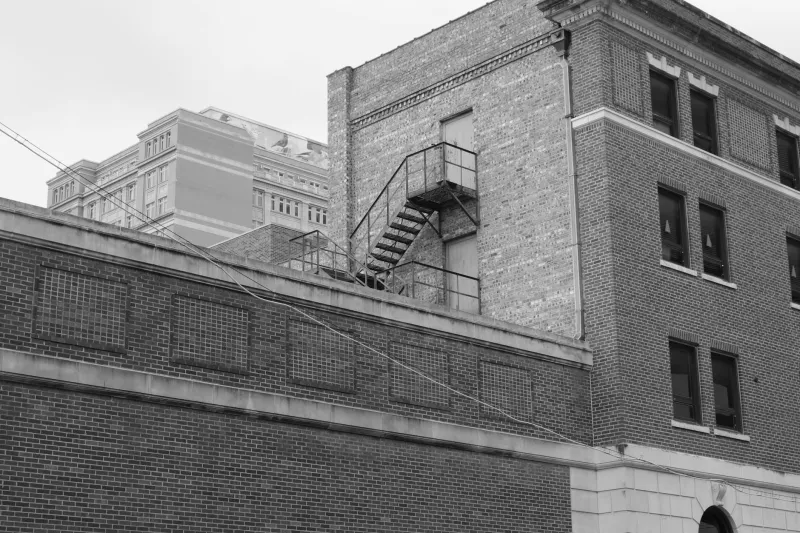
 Photo: U.S. Patent Office Washington DC, via mimg6cdn.haraj.com.sa
A clerical error had declared her legally deceased, invalidating her previous patent applications and throwing her life's work into bureaucratic limbo. For most inventors in the 1880s, this would have been the end of the story. But Anna Connelly wasn't most inventors, and her brush with legal death would ultimately preserve a legacy that more celebrated contemporaries never achieved.
The Problem Everyone Ignored
In the 1880s, American cities were growing upward at breakneck speed, but safety regulations hadn't caught up with architectural ambition. Buildings regularly trapped people during fires, with narrow staircases becoming death funnels filled with smoke and panic.
Most proposed solutions focused on better staircases or exterior ladders – improvements to existing escape routes. Connelly saw the problem differently. Instead of making escapes faster, she wanted to make them safer by creating entirely new pathways between buildings.
Her fire escape bridge design connected buildings at multiple floor levels, allowing people to evacuate horizontally rather than fighting their way down smoke-filled stairwells. The concept was so simple it seemed obvious – which is exactly why no one had thought of it before.
Fighting a System Built to Exclude
The patent process in the 1880s was particularly hostile to women inventors. Patent examiners routinely questioned whether women could actually understand the technical aspects of their own inventions. Many required male co-signers or transferred patents to husbands or fathers.
Connelly had already navigated this maze successfully with several smaller inventions. But the fire escape bridge was different – it was a major architectural innovation with massive commercial potential. The stakes were higher, and the resistance was fiercer.
When the bureaucratic error declared her dead, it provided the perfect excuse for officials who were already skeptical about a woman designing building safety systems. Her applications were shelved, her correspondence went unanswered, and her protests were dismissed as the ravings of someone who didn't officially exist.
The Advantage of Being Forgotten
What seemed like a catastrophic setback turned out to be an unexpected form of protection. While other inventors of the era fought public battles over patent rights – battles that often ended in expensive lawsuits and bitter disputes – Connelly's work remained safely buried in bureaucratic files.
This obscurity meant her designs weren't stolen, copied, or "improved" by male inventors looking to claim credit. They weren't rushed to market by companies more interested in quick profits than public safety. They weren't modified by committees or watered down by compromise.
Instead, they sat in filing cabinets, perfectly preserved, waiting for the world to catch up to their necessity.
The Tragedy That Proved Her Right
On March 25, 1911, a fire broke out at the Triangle Shirtwaist Factory in New York City. Workers on the upper floors found themselves trapped by locked doors and inadequate fire escapes. In eighteen minutes, 146 people died – mostly young immigrant women who had been working in conditions that prioritized productivity over safety.
 Photo: New York City, via thatgrapejuice.net
 Photo: Triangle Shirtwaist Factory, via www.schweden-urlauber.info
The Triangle Fire became a turning point in American labor law and building safety regulations. Suddenly, everyone was looking for solutions to prevent similar tragedies. City planners, architects, and safety officials began searching through old patent files for innovative fire escape designs.
That's when they rediscovered Anna Connelly's bridge system.
From Patent Files to Building Codes
Connelly's designs were exactly what post-Triangle Fire America needed. Her horizontal escape routes could have saved dozens of lives at the Triangle Factory. Her multi-building connection system addressed the urban density that made traditional fire escapes inadequate.
Within five years, variations of her bridge design were being incorporated into building codes across major American cities. By the 1920s, the principle of horizontal evacuation routes had become standard in commercial building design.
The irony was perfect: the woman who had been erased from official records had created the framework for modern fire safety law.
The Invisible Foundation
Today, every office building, apartment complex, and shopping center in America incorporates principles that Anna Connelly pioneered. Fire codes require multiple exit routes, horizontal escape paths, and building-to-building connections in many urban areas. Modern skyscrapers use sophisticated versions of her bridge concepts to move people safely between structures during emergencies.
Yet most people have never heard her name. She didn't get the public recognition that came to other inventors of her era. There are no statues, no museums, no schools named after her.
But in a way, this anonymity has made her more influential, not less. Her ideas became so fundamental to building safety that they're now invisible – like gravity or air pressure, they're just part of how the world works.
The Power of the Long Game
Anna Connelly's story reveals something important about how real change happens. The inventors who get immediate recognition often see their ideas implemented quickly but modified heavily. They become famous, but their original vision gets diluted by commercial interests and political compromise.
Connelly's bureaucratic exile protected her ideas from this fate. When her designs were finally discovered and implemented, the world was ready for them. The Triangle Fire had created the political will for serious safety reform. Cities had the resources to implement complex building modifications. The technology existed to execute her vision properly.
Her thirty-year delay wasn't a setback – it was perfect timing.
The Legacy That Outlasts Fame
Every time someone exits a burning building through a horizontal escape route, they're using Anna Connelly's innovation. Every time a fire department rescues people by moving them between buildings, they're executing her strategy. Every time a city planner designs evacuation routes that don't rely solely on stairwells, they're applying her principles.
She may have been declared dead by bureaucratic error, but her ideas are more alive than ever. In the end, being forgotten by history turned out to be the best thing that could have happened to her work – and to the thousands of people whose lives have been saved by fire escape systems she designed in a world that didn't think women could understand buildings.
Sometimes the most lasting victories come to those who are patient enough to let the world catch up to their vision.