Three Times It Burned. Every Time It Came Back Stranger and Stronger.
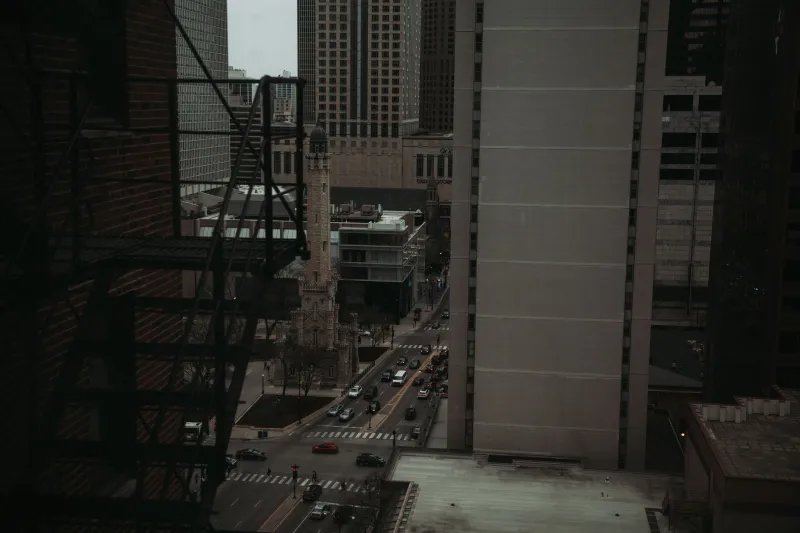
There's a version of Chicago's history that goes like this: the city burned down in 1871, everybody felt terrible about it, and then some very determined people rebuilt it bigger and better. End of story.
That version is incomplete in ways that matter.
The Great Chicago Fire is the famous one — October 8th, a dry autumn, a city built almost entirely of wood, and a blaze that consumed roughly three and a half square miles and left a third of the population homeless. But Chicago's streak of destruction didn't begin or end there. The city had burned badly before 1871. It would face cholera epidemics, labor violence, structural collapse, and waves of economic catastrophe in the decades that followed. What Chicago kept doing — improbably, stubbornly, sometimes furiously — was coming back. And the people who drove that comeback were rarely the ones you'd expect.
Two of them are worth knowing.
The Architect Who Lost His Firm and Redesigned Everything
William Le Baron Jenney arrived in Chicago in 1868, three years before the fire, with solid credentials and modest ambitions. He had trained in Paris at the École Centrale des Arts et Manufactures, served as a military engineer under General Sherman during the Civil War, and set up an architectural practice that was doing respectable, unremarkable work. He was not, by any obvious measure, a man on the verge of changing the shape of American cities.
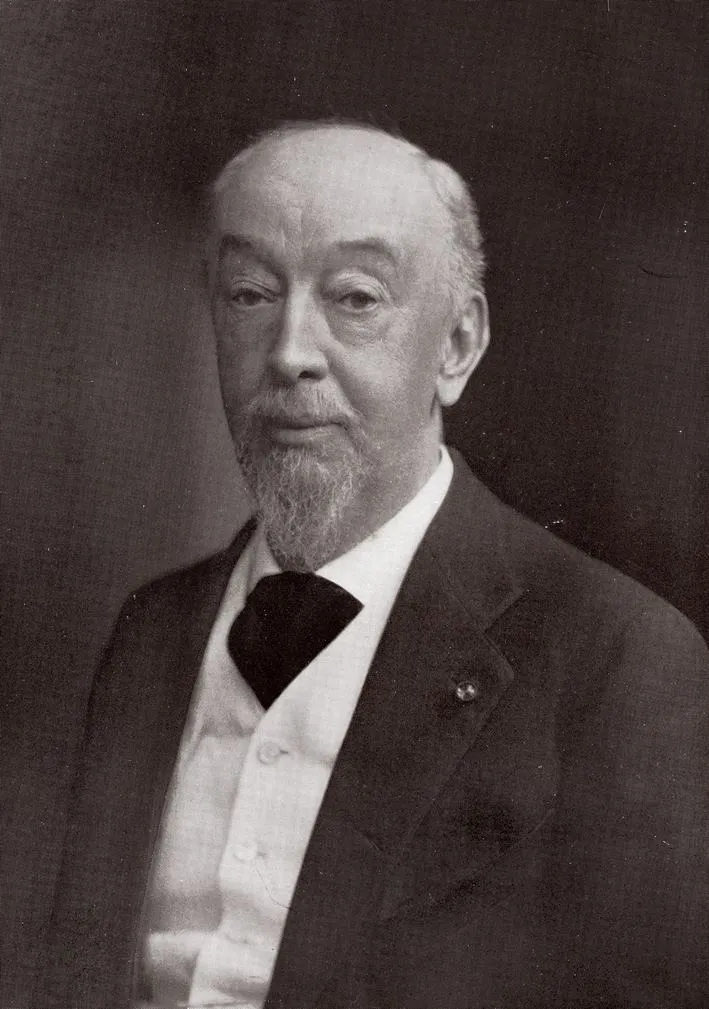 Photo: William Le Baron Jenney, via alchetron.com
The fire changed his circumstances before it changed his vision. Like hundreds of other Chicago business owners, Jenney lost significant work and investment in the catastrophe. His practice had to rebuild from near-scratch in a city that was simultaneously desperate for construction and flooded with architects competing for every commission. The pressure was immense and the margins were brutal.
What came out of that pressure, a decade later, was the Home Insurance Building.
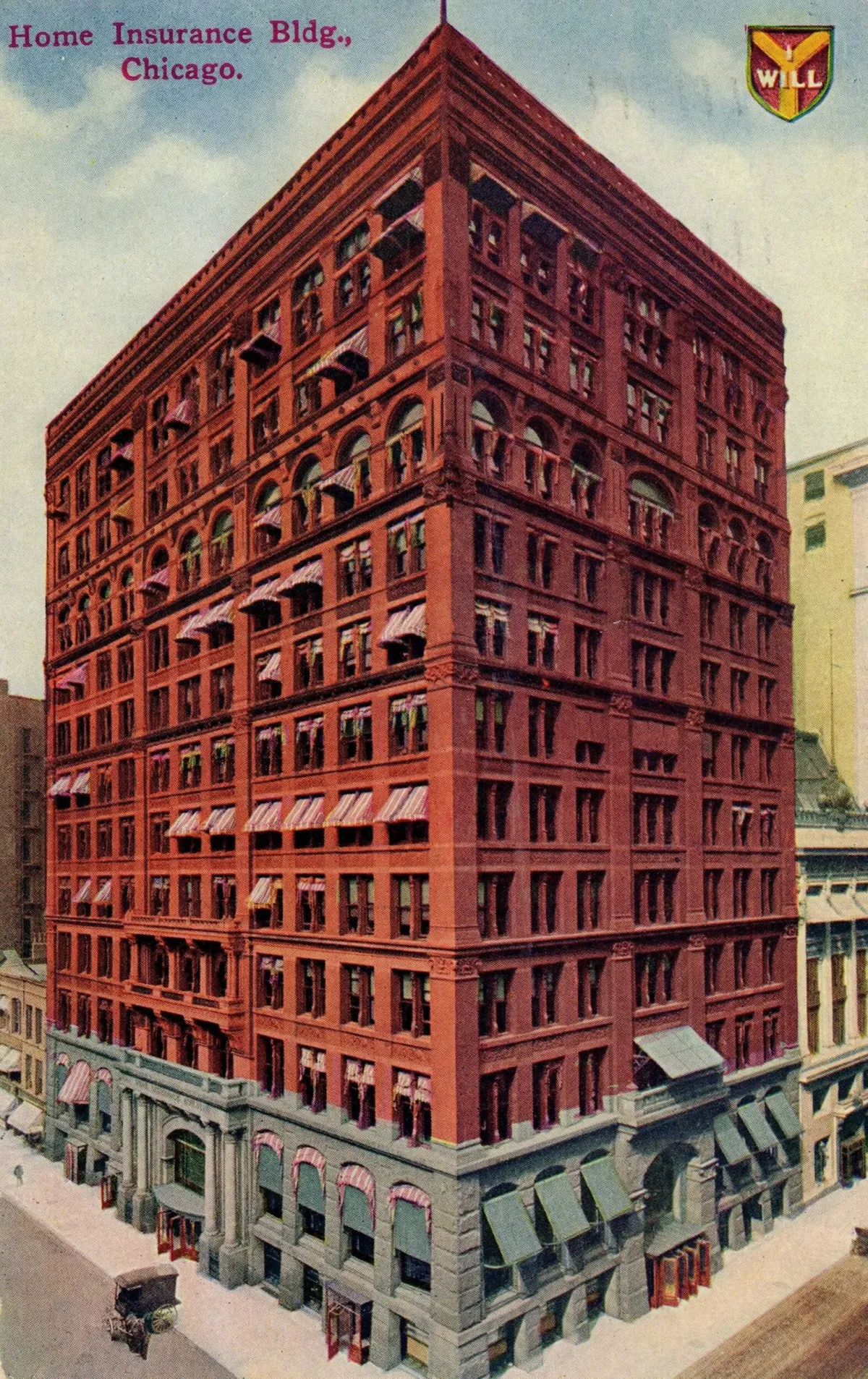 Photo: Home Insurance Building, via www.budowle.pl
Completed in 1885, it was ten stories tall and supported by an internal skeleton of iron and steel rather than by its exterior masonry walls. This sounds technical, and it is — but the consequence was profound and immediate. If a building's weight is carried by an internal frame rather than its outer walls, those outer walls can be made thinner. Thinner walls mean more glass. More glass means more light. And a frame that carries its own load can, in principle, be stacked as high as engineering permits.
Jenney had, more or less by accident and economic necessity, invented the skyscraper.
He was not celebrated as a visionary in the way his students — Louis Sullivan, Daniel Burnham — would eventually be. He was a practical man who had lost a lot and needed to solve concrete problems under real constraints. The solutions he found while rebuilding his practice after the fire turned out to be the solutions that gave modern cities their vertical dimension. Chicago's skyline, and by extension the skylines of every major American city, owes something to the fact that William Le Baron Jenney had a very bad couple of years and had to think differently.
The Woman Who Rebuilt What Fire Couldn't Destroy
Bertha Honoré Palmer was already one of Chicago's most prominent social figures when the fire hit — her family's real estate holdings were extensive, and her husband Potter Palmer was one of the city's most powerful businessmen. She had, by conventional measure, survived the disaster comfortably.
But the Chicago that emerged from the fire was not the same city, and Bertha Palmer was not the same woman.
In the two decades following the fire, as Chicago rebuilt itself and prepared to host the 1893 World's Columbian Exposition, Palmer threw herself into a project that had nothing to do with her social standing and everything to do with the city's identity. She became the driving force behind the Board of Lady Managers for the exposition — a role that was intended, by the men who created it, to be largely ceremonial. A nice committee for the wives.
Palmer had different ideas.
She fought, sometimes bitterly, for real resources and real authority. She insisted that the Woman's Building at the exposition — one of the fair's central structures — be designed by a woman (Sophia Hayden, a twenty-one-year-old MIT graduate), filled with work by women, and taken seriously as a statement about what women had contributed and could contribute to American civilization. She traveled internationally to collect exhibits. She corresponded with figures including Susan B. Anthony and Frederick Douglass. She used every ounce of social leverage she had accumulated over decades to force the exposition's male leadership to treat the project as legitimate.
The Woman's Building drew enormous crowds. More importantly, it demonstrated to millions of visitors from across the country that the argument for women's full participation in public and professional life was not abstract — it was architectural, visible, and real.
Palmer didn't do this because the fire had destroyed her. She did it because the fire, and the chaos of rebuilding, had shown her what Chicago actually was: a city that had no patience for things that weren't built to last.
What Chicago Keeps Teaching
The thing about Chicago as a metaphor is that it doesn't sentimentalize its own suffering. The city has never particularly trafficked in the language of resilience as comfort. It's more hard-edged than that — more interested in what gets built than in celebrating the fact of survival.
Jenney's steel frames and Palmer's Woman's Building share that quality. Neither one was built as a monument to overcoming adversity. Both were built because there was work to do and problems to solve and a city that needed things it didn't yet have.
That's perhaps the most honest version of the Chicago story, and the most transferable one. The remarkable things that rose from the wreckage here didn't rise because destruction is secretly a gift. They rose because the people doing the building had been stripped of comfortable options and were left with nothing but the problem in front of them.
The fire burned down a city made of wood. What came back was made of steel.
That's not inspiration. That's engineering. And sometimes those are the same thing.