The Boat Thief Who Sailed Into Congress
The Most Expensive Theft in Confederate History
On May 13, 1862, Robert Smalls committed what might have been the most consequential act of grand theft in American history. The 23-year-old enslaved man walked aboard the CSS Planter, a Confederate transport steamer docked in Charleston Harbor, put on the captain's hat, and sailed straight into legend.
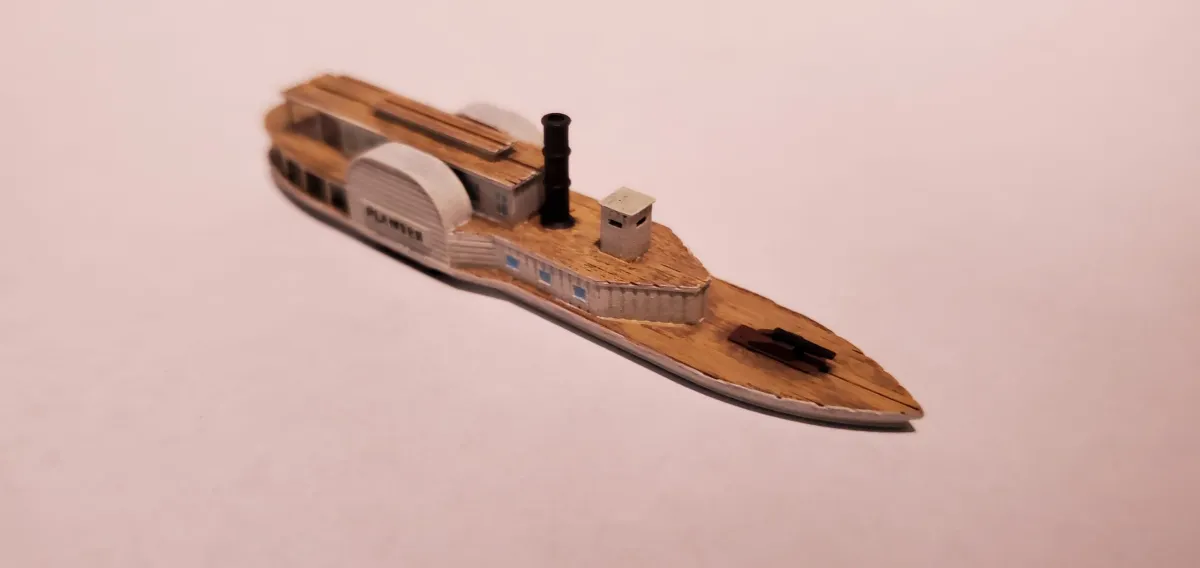 Photo: CSS Planter, via images.playableprints.io
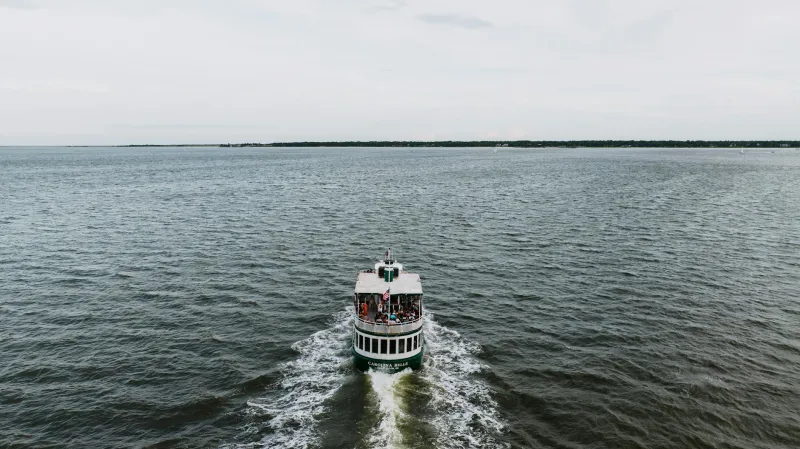
 Photo: Charleston Harbor, via charleston.com
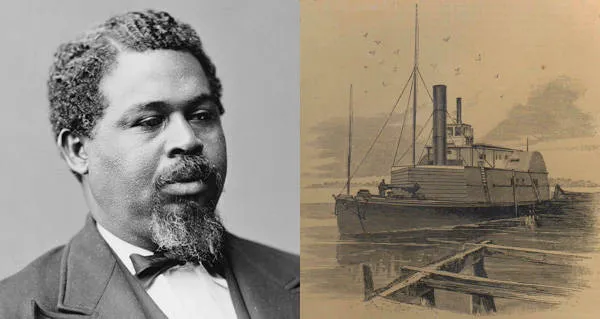 Photo: Robert Smalls, via allthatsinteresting.com
Smalls had spent years watching, learning, memorizing every signal, every password, every routine that kept Confederate ships moving through the heavily fortified harbor. When the white officers went ashore for the night, he saw his moment. With his family and a dozen other enslaved people hidden below deck, Smalls piloted the Planter past five Confederate forts, flashing the correct signals at each checkpoint.
As dawn broke, he raised a white bedsheet and delivered the ship—along with its cargo of artillery and military intelligence—to the Union blockade fleet waiting outside the harbor.
The Union Navy had just gained a valuable warship and an even more valuable pilot. But Smalls had gained something that seemed impossible just hours before: his freedom.
From Dock Worker to War Hero
Smalls had been born into bondage in Beaufort, South Carolina, in 1839. His mother was a house servant, his father likely her enslaver. By his teens, he was working the docks of Charleston, loading cargo, learning the waterways, and developing an encyclopedic knowledge of every inlet and channel along the South Carolina coast.
When war broke out, Confederate forces pressed him into service aboard the Planter. They saw a useful pair of hands. What they got was a man cataloguing their every weakness.
After his dramatic escape, Smalls became an instant celebrity in the North. But he wasn't content to be a symbol. He parlayed his naval knowledge into a commission as a pilot for the Union Navy, guiding federal ships through the treacherous waters he knew by heart. By war's end, he was commanding the very vessel he had stolen.
Each promotion seemed impossible until it happened. Each door that opened revealed another that logic said should stay locked forever.
The Congressman Nobody Saw Coming
When the war ended, Smalls returned to Beaufort and did something that would have been unthinkable six years earlier: he bought the house where his mother had been enslaved. Then he bought the house where he had been born.
But real estate was just the beginning. In 1868, South Carolina's new constitution granted Black men the right to vote and hold office. Smalls saw an opportunity that others might have considered too audacious to attempt.
He ran for the state legislature and won. Then he ran for the state senate and won. In 1874, he ran for the U.S. House of Representatives and won that too.
Congressman Smalls wasn't just a symbolic victory. He was a legislative force, introducing bills to establish public schools, protect voting rights, and build infrastructure in the neglected corners of the South. He understood that political power, like that stolen steamship, was only valuable if you knew how to navigate with it.
The Revolution That Reconstruction Forgot
For nearly two decades, Smalls served in various elected offices, watching the promise of Reconstruction slowly erode around him. The same white supremacists who had once enslaved him were finding new ways to strip away the rights he had helped secure.
But Smalls had learned something during his years of impossible leaps: sometimes the most audacious move is to keep fighting when everyone else assumes you're beaten.
In 1895, when South Carolina convened a constitutional convention specifically to disenfranchise Black voters, Smalls was one of only six Black delegates. He stood on the convention floor and delivered a speech that cut to the heart of American hypocrisy:
"My race needs no special defense, for the past history of them in this country proves them to be equal of any people anywhere. All they need is an equal chance in the battle of life."
The convention ignored him and passed the discriminatory measures anyway. But Smalls had done something more important than winning: he had forced the architects of Jim Crow to hear exactly what they were destroying.
The Audacity of Believing in America
Robert Smalls died in 1915, in the same Beaufort house where he had been born enslaved. By then, the legal architecture of white supremacy had largely dismantled the multiracial democracy he had helped build during Reconstruction.
But his life proved something that would echo through generations of civil rights activists: the distance between impossible and inevitable is often shorter than it appears.
Smalls never had a master plan. He couldn't have predicted that stealing a Confederate warship would lead to a seat in Congress. Each leap required him to believe in possibilities that hadn't existed the day before.
That might be the most radical thing about his story. Not that he escaped slavery or commanded a warship or served in Congress—though all of those were remarkable. It's that he kept believing America could become the country it claimed to be, even when all the evidence suggested otherwise.
Sometimes the most dangerous thing you can do is refuse to accept that the way things are is the way they have to stay. Robert Smalls spent his entire life proving that point, one impossible leap at a time.