He Swept the Floors of the Future Every Night — Nobody Noticed He Was Learning It
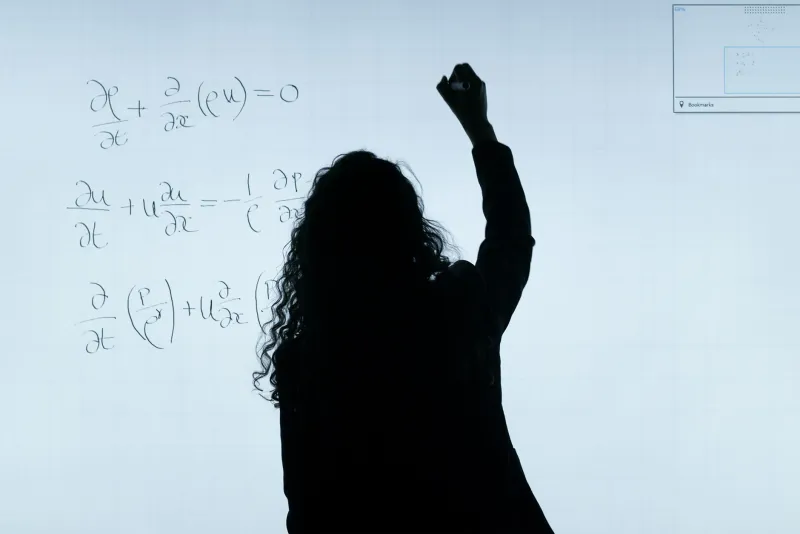
The Last Man in the Building
Most nights, after the graduate students packed up their notebooks and the professors headed home to their families, the lab belonged to him.
Not in any official sense. His name wasn't on a grant, wasn't printed on a door, wasn't attached to any research. He was the man with the cart — the one who refilled the paper towel dispensers, bagged the coffee grounds, and ran a mop down hallways that smelled like dry-erase markers and ambition. His job was to leave the place cleaner than he found it.
But he kept finding things he couldn't help reading.
Equations half-finished on whiteboards. Printouts left in recycling bins. Journal articles abandoned on benchtops with coffee rings soaking through the margins. Every night, he cleaned around the evidence of other people's thinking. And every night, a little of it stuck.
This is the story of what happens when curiosity has no ceiling — and when the people guarding the door to knowledge forget to watch the service entrance.
A Childhood Built Around Questions Nobody Would Answer
He grew up in a mid-sized town in the rural South, the kind of place where asking too many questions could get you labeled difficult. His father worked at a lumber mill. His mother cleaned houses on the weekends. The local school was underfunded in ways that would take a federal audit to fully document — science class meant a textbook from the 1970s and a teacher who was also the football coach.
He was bright in the way that doesn't always show up on tests. He took apart radios to see how they worked. He read the backs of cereal boxes, the fine print on medicine bottles, the technical manuals his uncle brought home from a factory job. He wasn't looking for anything in particular. He was just hungry.
College was never a serious conversation in his house. When he graduated high school, he did what made sense: he found work. He painted houses for a while. Drove a forklift. Eventually, through a cousin who knew someone, he landed a facilities job at a university research center in the mid-1980s — a position that came with a modest paycheck, a uniform, and access to some of the most intellectually charged rooms in the country.
He had no idea what he'd walked into.
The Education Nobody Assigned
The first few months, he mostly kept his head down. The researchers barely acknowledged him. That was fine. He wasn't there for conversation.
But the whiteboards were impossible to ignore.
Quantum mechanics was having a complicated decade. The lab was deep in questions about particle behavior, probability states, the strange and stubborn weirdness of how matter behaves at scales too small to see. The researchers were chasing problems that had no clean answers — and they were leaving their work everywhere.
He started writing things down. Not to impress anyone. Just because the notation was interesting, and he wanted to understand what he was looking at. He bought used textbooks from the campus bookstore with money he didn't really have. He checked out library books — the ones with call numbers he'd seen on the researchers' shelves. He stayed late, not because he had to, but because the building was quiet and the thinking came easier without interruption.
A sympathetic grad student noticed him one evening, staring at a diagram left on the board. Instead of shooing him away, she asked what he thought it meant.
His answer surprised her.
The Insight That Came From Somewhere Unexpected
There's a concept in quantum physics around measurement and interference — the idea that the act of observing a system changes it. Researchers had been wrestling with a particular modeling problem for months, trying to account for certain inconsistencies in their data.
He had been watching them wrestle with it. From a distance, with a mop in his hand, he'd seen the same equations go up on the board and come down again. He'd read the papers they'd thrown away. He'd thought about it during the long, quiet hours of his shift.
The suggestion he eventually made — quietly, almost apologetically, to the grad student who'd bothered to ask — reframed the variable they'd been treating as noise. It wasn't noise. It was signal. The inconsistency wasn't a flaw in their data. It was the data.
It took the team another three months to fully work through the implications. But the direction he'd pointed them in held up.
His name didn't appear in the published paper. That's a separate and uncomfortable part of this story.
The Wall That Credentialism Builds
When the lab director eventually learned who had contributed the reframing idea, the response was complicated. There was genuine appreciation — and genuine discomfort. The man with the mop had no degree. No institutional affiliation. No standing in the academic community that would make citing his contribution straightforward.
He was offered something better than a footnote, he was told. He was offered a chance to enroll in classes part-time, with some financial support from the department. It was a generous gesture. It was also a way of managing the awkwardness of what had happened.
He took the offer. It took him eleven years to finish his undergraduate degree, going part-time around work, around a marriage, around two kids. He was in his mid-forties when he walked at graduation.
By then, he'd already contributed to two more published studies — this time with his name attached.
What the Uneven Path Actually Looks Like
There's a version of this story that gets told as a feel-good miracle — the janitor who turned out to be a genius. That framing does him a disservice.
He wasn't a miracle. He was a person with curiosity and access and enough stubbornness to keep going when the system offered him every reason to stop. What's remarkable isn't that he was secretly brilliant. It's that brilliance kept showing up in a place where the institutional machinery was designed to make it invisible.
The labs he cleaned were full of smart people. But smart people, working inside a system that rewards credentials over insight, can develop blind spots. They know the literature. They know the expected approaches. Sometimes what you need is someone who learned everything from scratch, who has no investment in how the problem is supposed to be solved.
He saw the equation differently because he came to it differently.
That's not a small thing. That's actually the whole thing.
The Longer Lesson
He retired a few years ago. He still consults occasionally — informally, the way he's always preferred to work. His name is known in a narrow slice of the physics community, respected in the quiet way that people respect someone who earned something the hard way.
He doesn't spend much time talking about the paper where his name didn't appear. When he does, he's more philosophical than bitter. People protect the systems that protected them, he's said. I just happened to come in through a door they forgot to lock.
The whiteboards he used to clean are still there, in a building that's been renovated twice since he started. New researchers fill them every day. New maintenance workers empty the trash around the edges of new ideas.
The question worth sitting with is how many of those workers are looking at the boards. And whether anyone is bothering to ask what they see.