The Teenage Mother Nobody Planned to Listen To
When Meriwether Lewis and William Clark assembled their Corps of Discovery in 1804, they knew they'd need translators to navigate the complex web of Native American territories stretching to the Pacific. What they didn't expect was that their most crucial diplomatic decisions would end up in the hands of a 16-year-old Shoshone woman carrying an infant on her back.
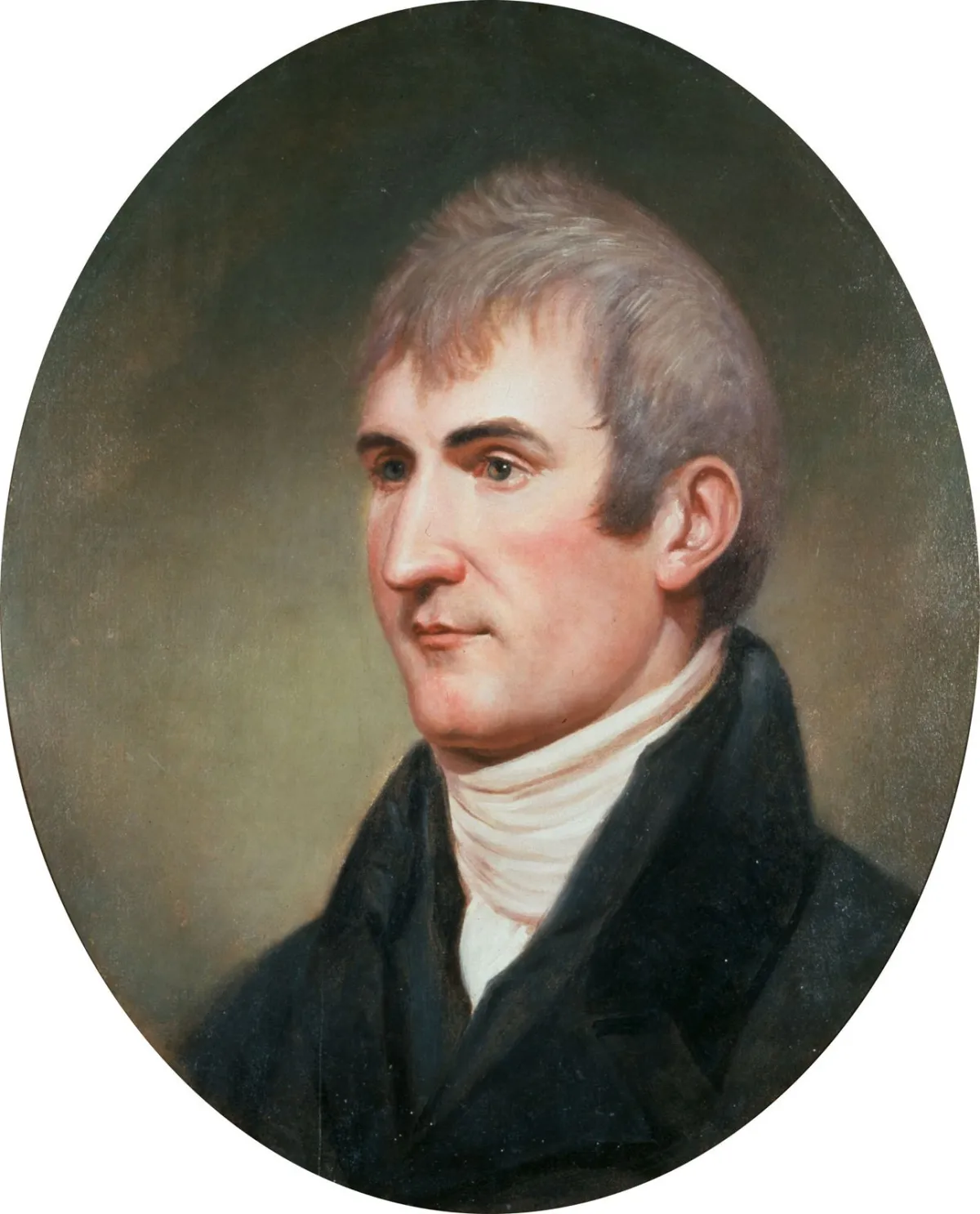 Photo: Meriwether Lewis, via cdn.britannica.com
Sacagawea wasn't even supposed to be the translator. She was just married to one—Toussaint Charbonneau, a French-Canadian fur trader the expedition hired for his language skills. She came along because she was nursing their newborn son and because, as Lewis noted in his journal, "she might be useful as an interpreter among her own people."
Nobody imagined she'd become the expedition's secret weapon for staying alive.
When Words Weren't Enough
The first sign that Sacagawea was more than a linguistic go-between came in May 1805, when a sudden squall nearly capsized one of the expedition's boats. While the men struggled with the sails and Charbonneau panicked at the rudder, Sacagawea calmly retrieved crucial supplies and documents from the churning water—including Lewis's journals and irreplaceable navigational instruments.
But it was her performance in moments requiring cultural translation, not just linguistic translation, that repeatedly saved the expedition from disaster.
In August 1805, the Corps encountered their first band of Shoshone warriors. The meeting could have gone catastrophically wrong—armed strangers appearing in tribal territory typically meant conflict. Lewis and Clark had their interpreters ready and their diplomatic gifts prepared. But it was Sacagawea's immediate recognition of the band's leader as her brother, Cameahwait, and her emotional reunion with him, that transformed a potentially hostile encounter into crucial alliance.
Reading the Room When Lives Depended on It
What made Sacagawea invaluable wasn't just her ability to translate words—it was her instinct for reading situations that formal diplomacy couldn't navigate. She understood that among Plains tribes, a war party didn't travel with women and children. Her presence with the expedition immediately signaled peaceful intent in a way that no amount of flag-waving or gift-giving could match.
Time and again, she made split-second judgment calls that her male colleagues, for all their military training and diplomatic experience, simply couldn't make. When the expedition encountered the Nez Perce in September 1805, it was Sacagawea who noticed the warriors' initial wariness and suggested the Americans demonstrate their peaceful intentions by sharing a meal—a gesture that led to the tribe providing crucial horses and guides for the mountain crossing.
Her cultural bilingualism—the ability to move between worldviews, not just languages—repeatedly bridged gaps that could have ended the expedition in violence.
The Decisions History Forgot to Record
The most remarkable aspect of Sacagawea's contribution may be what we'll never fully know: the countless small interventions, suggestions, and course corrections she made that never appeared in the official expedition journals. Lewis and Clark were meticulous record-keepers, but they were writing for posterity and government sponsors. The insights of a teenage Native American woman didn't fit their narrative of masculine exploration and American destiny.
Yet traces of her influence appear throughout their records. Lewis's journal entry from October 1805 mentions that Sacagawea "advised" the party on which route to take through dangerous rapids. Clark's notes describe her "suggesting" they cache supplies at specific locations. These weren't translations—they were strategic decisions that shaped the expedition's success.
Modern historians studying the expedition's route have concluded that many of the Corps' most crucial decisions—which rivers to follow, where to winter, how to approach unfamiliar tribes—bore the hallmarks of someone with intimate knowledge of western geography and Native American politics. Someone like Sacagawea.
The Invisible Hand That Guided an Empire
By the time the Corps of Discovery returned to St. Louis in September 1806, they had accomplished what Thomas Jefferson hoped: they'd mapped a route to the Pacific, established American claims to western territories, and demonstrated that transcontinental travel was possible. Their success launched the westward expansion that would define American history for the next century.
But strip away Sacagawea's contributions—her diplomatic interventions, her cultural insights, her ability to transform potentially hostile encounters into peaceful negotiations—and it's unclear the expedition would have survived its first encounter with organized Native American resistance.
Clark understood this better than history remembers. Years later, he adopted and educated Sacagawea's son, Jean Baptiste, calling the boy "my little dancing boy" and ensuring he received a European education. It was an unusual gesture of gratitude from a man who rarely showed such personal investment in expedition members.
The Translator Who Translated a Nation's Future
Sacagawea's story reveals something profound about how history actually gets made versus how we remember it getting made. The official narrative of Lewis and Clark emphasizes bold leadership, scientific discovery, and American determination. It's a story about great men doing great things.
The reality is messier and more collaborative. Critical decisions emerged from conversations we can't reconstruct, involving insights from people whose perspectives weren't considered worth recording. The expedition succeeded not just because of Lewis and Clark's leadership, but because a teenage mother possessed cultural intelligence that formal military training couldn't provide.
In hiring Sacagawea as a translator, the expedition's leaders thought they were solving a practical communication problem. What they actually did was bring aboard someone whose understanding of the human landscape they were crossing proved as valuable as any map.
The People History Needs Most
Today, as we reconsider whose voices shaped American history, Sacagawea's story offers a different way of thinking about influence and power. She wasn't a leader in any traditional sense—she held no official authority, commanded no troops, signed no treaties. But her ability to navigate between cultures, to read situations that others couldn't interpret, to make crucial judgment calls in moments of crisis, shaped the trajectory of a continent.
Her life suggests that the people history most needs are often the ones it's least likely to remember: the translators who do more than translate, the advisors who work without titles, the bridges between worlds who make possible the connections that change everything. They're the ones who understand that sometimes the most important conversations happen in the spaces between official languages, where real understanding begins.