
The Accident That Changed Everything
Leonhard Euler was sketching celestial maps in his St. Petersburg study when the headache struck. It was 1738, and the Swiss mathematician had already earned recognition across Europe for his work on infinite series and number theory. But as he squinted at his calculations that evening, trying to ease the pressure building behind his right eye, he couldn't have imagined he was about to lose something that would ultimately make him see mathematics more clearly than ever before.
 Photo: St. Petersburg, via images.musement.com
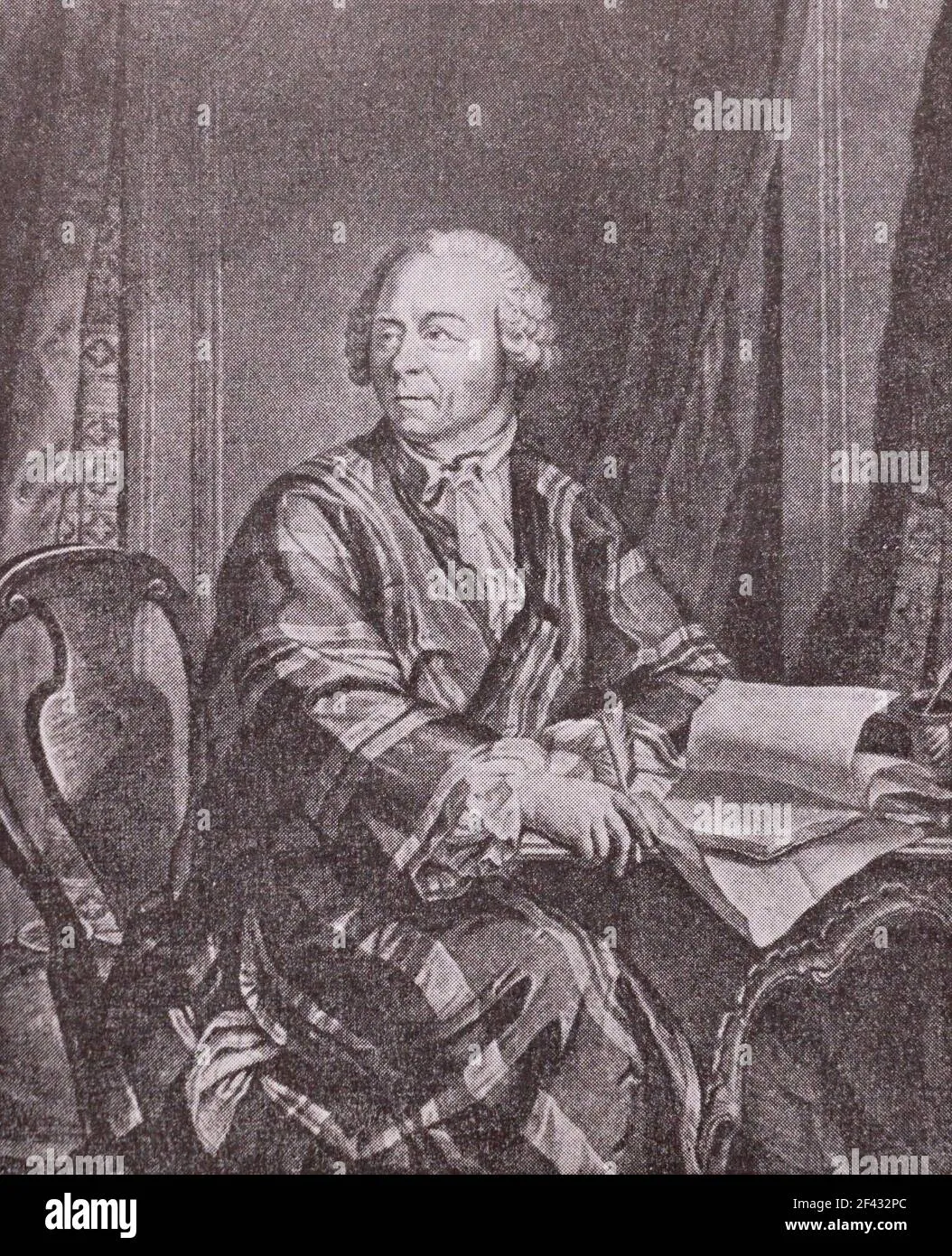 Photo: Leonhard Euler, via c8.alamy.com
The fever came next, then the swelling. Within days, the vision in his right eye was gone forever. Colleagues whispered that his career might be finished—after all, how could a mathematician work without being able to see his own equations?
They were spectacularly wrong.
When Sight Became a Distraction
Euler's response to losing his eye wasn't retreat—it was acceleration. In the decade following his partial blindness, he published some of his most influential work, including advances in calculus and the famous equation that bears his name: e^(iπ) + 1 = 0. Friends noticed something curious: without the visual clutter of written symbols competing for his attention, Euler seemed to hold entire mathematical universes in his head.
"I can calculate without effort," he told a colleague, "the way other people breathe."
What looked like limitation was becoming liberation. Euler had always possessed an extraordinary memory—he could recite the entire Aeneid and tell you which line appeared on which page of his edition. But now, forced to rely entirely on mental computation, that memory transformed into something approaching mathematical telepathy.
The Day the Lights Went Out Completely
Then, in 1766, disaster struck again. A cataract claimed the vision in Euler's remaining eye, plunging him into total darkness at age 59. This time, even his supporters feared the end had come. The Royal Academy of Sciences in Berlin, where Euler worked, quietly began discussing his pension.
 Photo: Royal Academy of Sciences in Berlin, via static.wikitide.net
Instead of ending his career, complete blindness launched Euler into the most productive phase of his life.
The Revolution Hidden in Darkness
Working entirely through dictation to assistants and his own children, Euler produced nearly half of his complete works—over 400 papers and books—during his 17 years of total blindness. But quantity wasn't the remarkable part. The mathematics he created in darkness possessed a clarity and elegance that surpassed much of his earlier sighted work.
Without visual aids, Euler was forced to approach problems through pure logical structure. Complex calculations that might have taken pages of written work compressed into mental operations he could manipulate like a chess master visualizing moves. His mind became a laboratory where abstract concepts could collide and combine without the interference of symbols on paper.
His assistant, Nicolaus Fuss, marveled at watching Euler work: "He would pace the room, carrying entire proofs in his head, then dictate them in their final form as if reading from an invisible book."
Teaching Mathematics Without Seeing It
Perhaps most remarkably, Euler's blindness transformed him into a more effective teacher and collaborator. Unable to simply point to equations or sketch diagrams, he was forced to develop new ways of communicating mathematical ideas through pure description and logical flow.
This constraint led to innovations in mathematical notation and explanation that made complex concepts accessible to students for the first time. His textbooks, dictated during his blind years, became the foundation for mathematical education across Europe. By losing the ability to show mathematics visually, Euler learned to make others see it conceptually.
Students who worked with the blind Euler often reported that his explanations were clearer and more intuitive than those of sighted professors. Stripped of visual shortcuts, he was compelled to build understanding from first principles, creating pathways to comprehension that worked for minds that thought differently than his own.
The Sight That Comes from Darkness
Euler's story challenges our assumptions about disability and capability, but it's not a simple triumph narrative. He grieved the loss of his vision and struggled with the practical challenges blindness brought. What made his story remarkable wasn't that he overcame his disability—it was that he discovered capabilities he'd never known he possessed.
In losing his physical sight, Euler gained what might be called mathematical vision: the ability to see patterns, relationships, and structures that existed beyond the symbols used to represent them. His blindness didn't make him a better mathematician despite his limitation—it revealed forms of mathematical thinking that sight had actually been obscuring.
The Legacy of Seeing Differently
When Euler died in 1783, he left behind a body of work so vast that the Berlin Academy was still publishing his papers 50 years later. But his true legacy lies in proving that the human mind can find ways to excel that have nothing to do with the tools we think we need.
Today, as we grapple with questions about accessibility and inclusion in science and mathematics, Euler's story offers a different framework for thinking about difference. Rather than asking how to help people with disabilities succeed despite their limitations, his life suggests we should ask what forms of insight and capability might emerge when traditional approaches become impossible.
The mathematician who couldn't see equations became the one who saw mathematics most clearly. In the darkness of his study in St. Petersburg, Leonhard Euler discovered that sometimes you have to lose your way of looking at the world to truly see what's possible.